
Dog swallowed toy stuffing: what to do? Take a breath first. You found a torn toy and a trail of fluff, and your dog may have eaten more than you can see. Maybe a squeaker is missing too. When a dog ate toy stuffing, the next few minutes call for calm, simple steps instead of guesswork.
This guide covers what to check first, what to have ready when you call your vet, what not to try at home, and the warning signs to watch for. It’s general guidance, not a diagnosis. Your vet makes the call on your dog’s situation.
Dog Swallowed Toy Stuffing: What to Do First
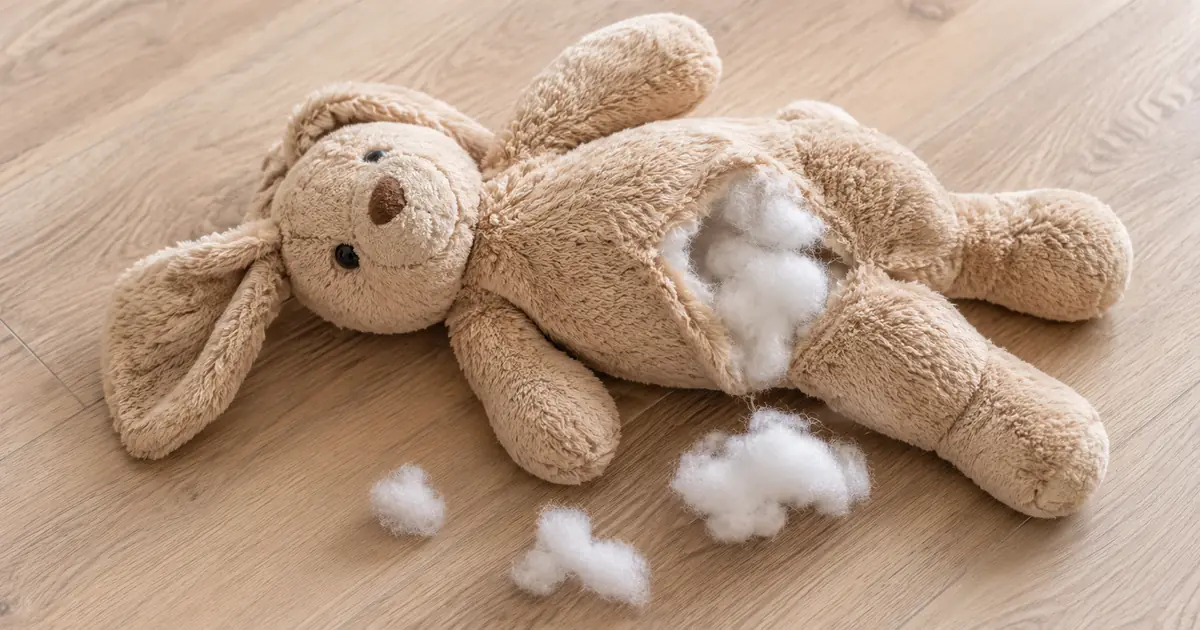
Start by taking away access. Lift the toy out of reach and move any other dogs away from the mess. Then gather every piece you can find: fabric scraps, loose stuffing, the squeaker if it’s lying around, and any tag or crinkle film. Lay the pieces next to what’s left of the toy. The gap between the two tells you what your dog may have swallowed.
Next, check your dog’s breathing. This step sorts the situation into two paths.
Breathing trouble now. Choking or struggling to breathe normally means an emergency vet visit right away.
Swallowed, but breathing normally. Your dog may look completely fine. That’s still the moment to call your vet, which the next section helps with. Keep the toy remains where you can reach them.
One rule applies in both cases: if you see a string, thread, or fiber hanging from your dog’s mouth or rear end, don’t pull on it. Veterinary sources warn that pulling can cause serious damage, so leave it for your vet.
Why act quickly even when your dog seems okay? Veterinary references, including Cornell’s veterinary college and the Merck Veterinary Manual, treat a blocked digestive tract as an emergency, and Cornell says prompt veterinary care is critical to the best outcome. Not every swallowed object causes a blockage, but you can’t tell by looking at your dog.
What to Tell Your Vet When You Call
A clear picture helps the clinic decide what to do next. You don’t need every answer, and none of this is a test you have to pass. It’s simply useful to have ready:
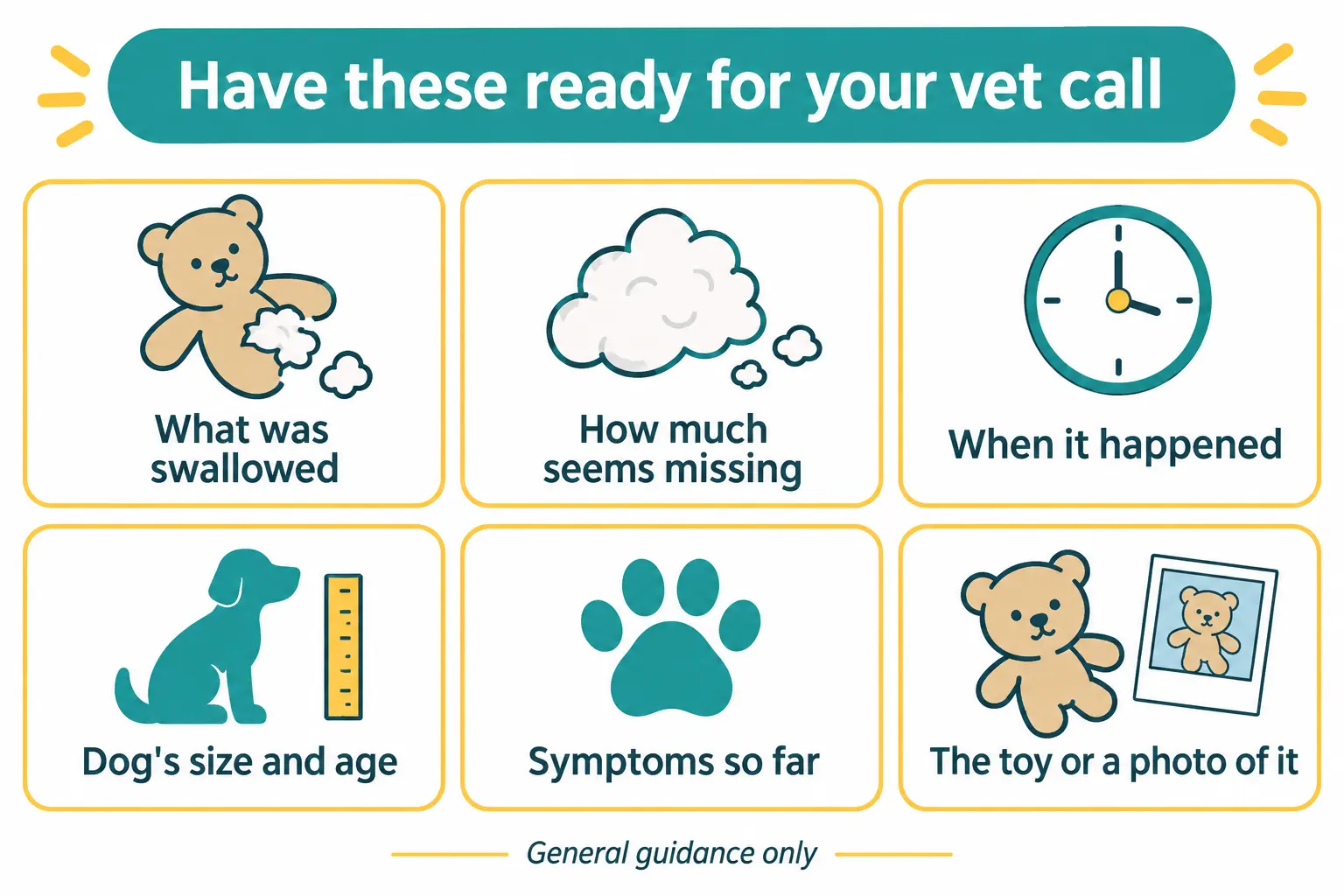
- What was swallowed. Soft stuffing, a squeaker, fabric, crinkle film, rope fibers, or a whistle. Hard parts and soft filling are different situations, so be specific.
- How much seems missing. A rough guess is fine. The side-by-side pieces from the first step help here.
- When it happened, as best you can tell.
- Your dog’s size and age.
- Any symptoms so far, including vomiting, drooling, or changes in behavior.
- The toy itself, or a photo of it and its packaging, if you still have them.
If you can’t answer something, say so. “I’m not sure how much is missing” is a useful answer.
Why You Shouldn’t Make Your Dog Throw Up on Your Own
Don’t try to make your dog vomit, give home remedies, or hold back food on your own. Whether vomiting makes sense depends on what was swallowed and the circumstances, and that’s a decision for your vet.
It’s tempting to search for a home trick because it feels like doing something. The useful action is the phone call. Sources also differ on how much time matters, so a number from a blog post isn’t a safe guide, and this article gives none. Let your vet say whether inducing vomiting is appropriate, and how.
Swallowed a Squeaker or Hard Piece? Call Your Vet
Stuffing is soft. A squeaker, whistle, or hard plastic piece is not. Treat any swallowed hard part as a call-your-vet situation, and ask whether your dog needs a check.
Squeaky plush toys often hold more than one part: a plastic squeaker, crinkle film, sometimes a whistle or rope fibers on the outside. Fabric scraps count too. Don’t assume a small piece will simply pass. Tell your vet exactly which parts are missing, and bring the toy remains or photos so the clinic can see what they’re dealing with.
Warning Signs of a Blockage After Your Dog Eats Toy Stuffing
Watch for these signs and tell your vet right away if you see any:
- Vomiting that repeats
- Loss of appetite
- Unusual tiredness or low energy
- A swollen or tender-looking belly
- Straining to poop, diarrhea, or other changes in bowel movements
If a dog ate toy stuffing and threw up, mention it on the call. Vomiting is one of the signs vets want to hear about. A dog acting normal also doesn’t rule out a problem, so keep watching and keep your vet in the loop.
What a Vet Visit May Involve
A visit often starts with questions and a physical exam, so the details from your checklist come in handy. From there, your vet may suggest imaging, a period of monitoring, or a procedure, depending on what they find. These are the vet’s decisions to make for your dog.
Monitoring is worth understanding. Watching your dog at home on your own is different from monitoring that your vet plans and manages. Follow your vet’s instructions on which one applies.
How to Lower the Chance of a Repeat
Once things settle, a simple rule helps most: set a toy aside as soon as a seam opens, a squeaker shows, or stuffing starts to poke out. Our guide to the signs a plush toy is wearing out covers what to look for. Soft toys are made for supervised play, so stay nearby when your dog has one.
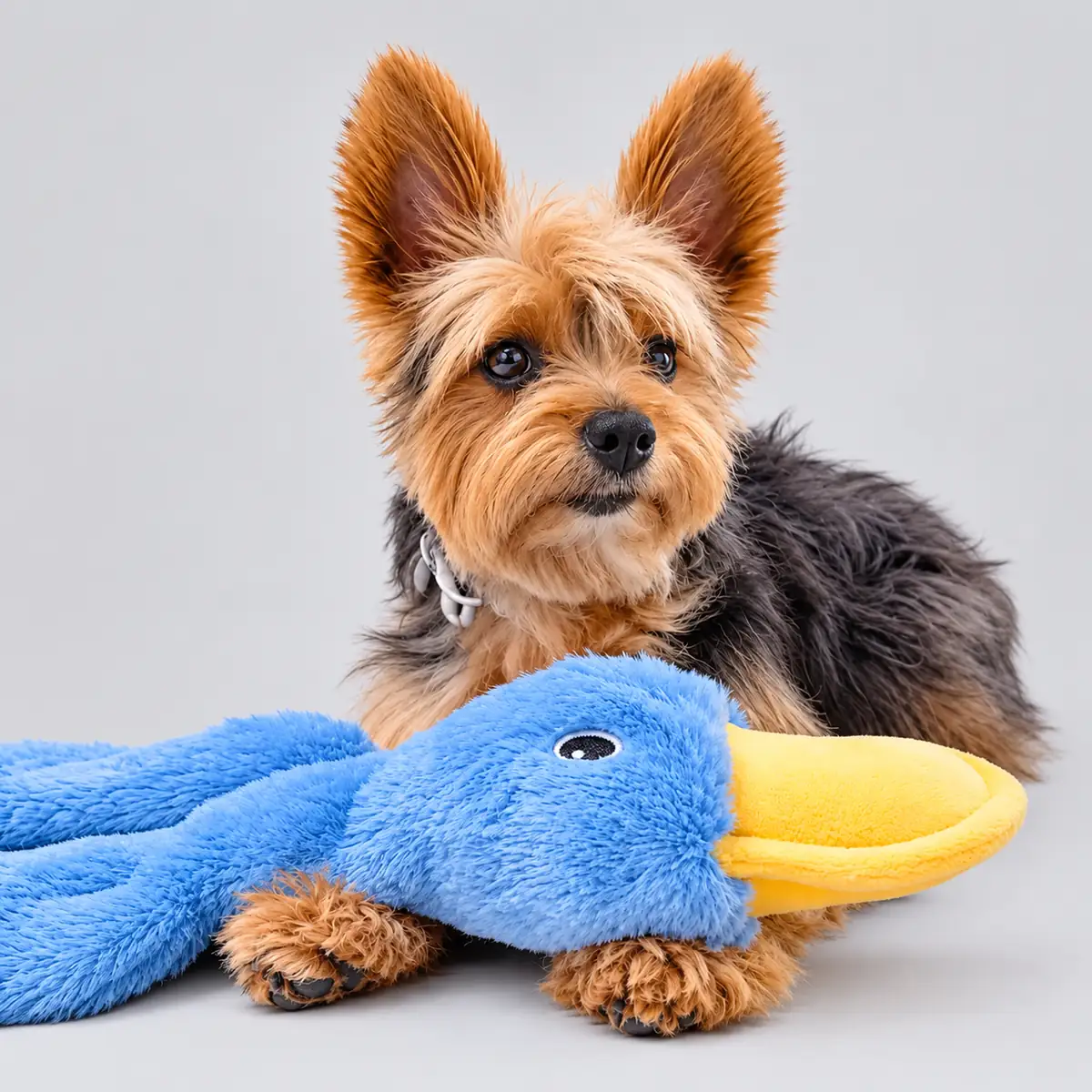
Some dog parents prefer designs with less loose material inside. Choosing between stuffed and stuffing-free toys lays out those trade-offs. For example, our stuffing-free crinkle duck has no loose filling, but a squeaker and crinkle paper remain inside. Its product page calls for supervised play only and says it’s better suited to gentle mouthers than power chewers. The silent oversized duck has no internal squeaker and suits dogs who aren’t aggressive chewers. Set it aside once the fabric is damaged.
When in Doubt, Call Your Vet
So, dog swallowed toy stuffing: what to do? Remove the toy, check breathing, gather the pieces, and call your vet with what you know. Skip the home tricks, and watch for the warning signs above. For the bigger picture, read how plush toys are built and used safely, or browse more soft toy options when it’s time to replace the toy.