
If your puppy is going through that first round of teething, you’ve probably already caught them working on a shoe, a table leg, or your own fingers. Finding the best dog rope toys for puppies means looking past flashy packaging to what actually suits a puppy’s smaller mouth and softer teeth. This guide walks through what actually matters when picking one, and when your puppy might be ready for it.
Why puppies need a different rope toy than adult dogs
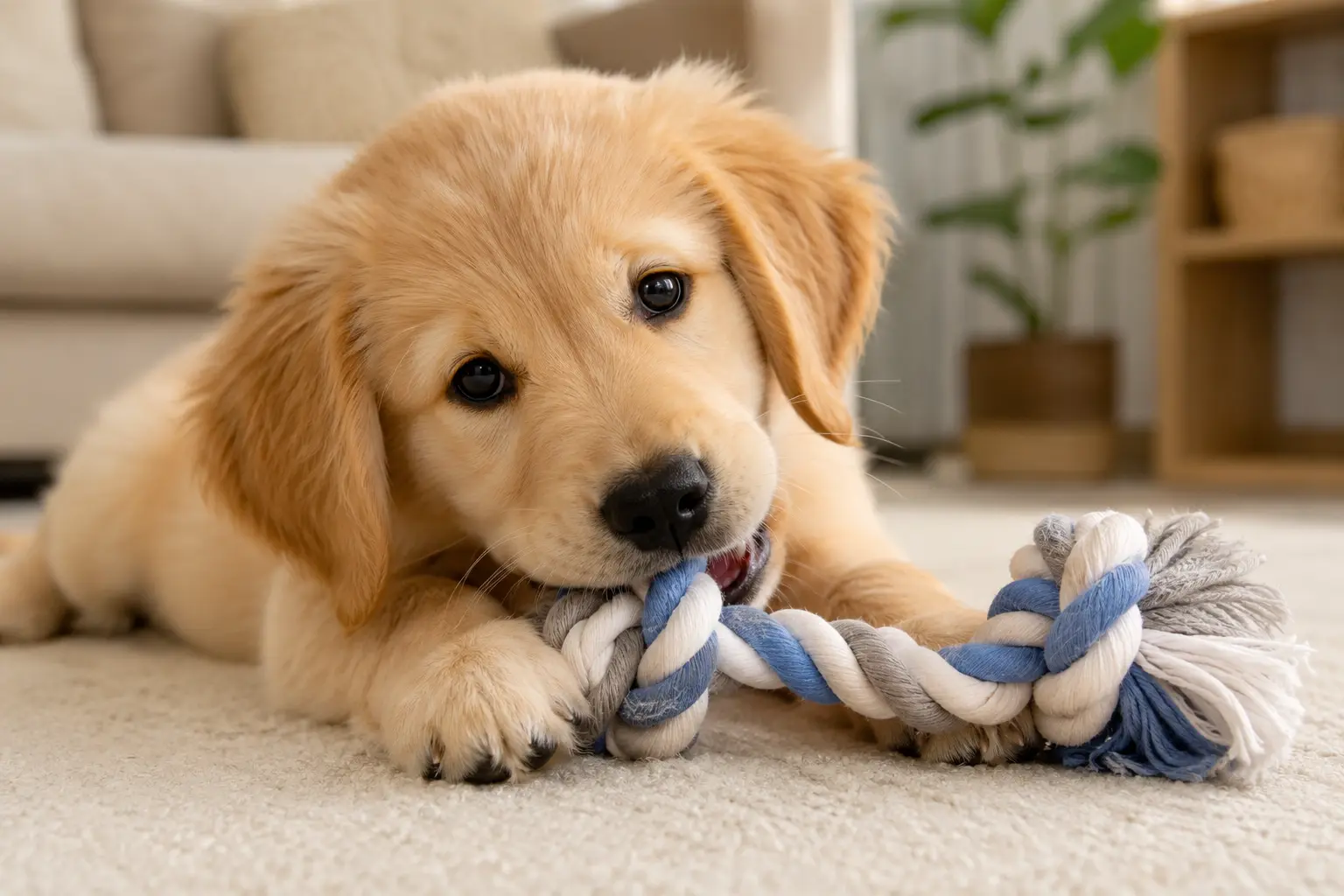
A puppy’s mouth isn’t just a smaller version of an adult dog’s. Their baby teeth are thinner and sharper than permanent teeth, which means they can catch or snag in rope fibers more easily during rough play. Their jaws are also still developing, so the bite force and stamina behind a puppy’s chewing looks nothing like a full-grown dog working through the same toy. Timing matters here too.
A young puppy still cutting teeth generally does better with gentle, supervised chewing and light tugging, while an older puppy with most of their permanent teeth in can usually handle a bit more back-and-forth pull. None of this means puppies can’t enjoy rope toys. It just means the best dog rope toys for puppies are chosen with these differences in mind, not treated like a smaller copy of an adult toy.
What age should a puppy start using a rope toy?
There’s no single magic age, but according to PetMD’s guidance on puppy teething, rope toys and tug-of-war are generally better suited to older puppies whose permanent teeth have come in, rather than very young puppies still in the peak of losing baby teeth. Very young puppies can still enjoy chewing on soft rope, just with lighter handling and closer supervision, especially if another person or dog is involved in tug.
As your puppy’s adult teeth settle in, usually somewhere around six months, you can gradually work up to more active tug-of-war sessions. The safest approach is watching your specific puppy rather than counting weeks: a puppy who’s calm and gentle with a toy is ready for different play than one who yanks and thrashes right away.
Choosing rope texture and softness for teething gums
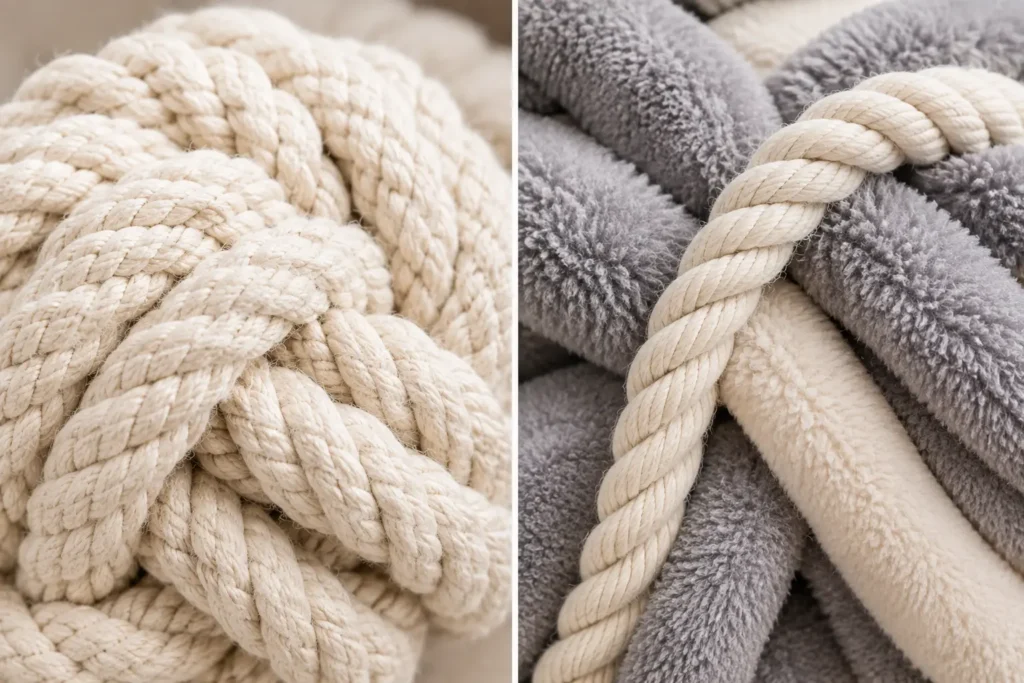
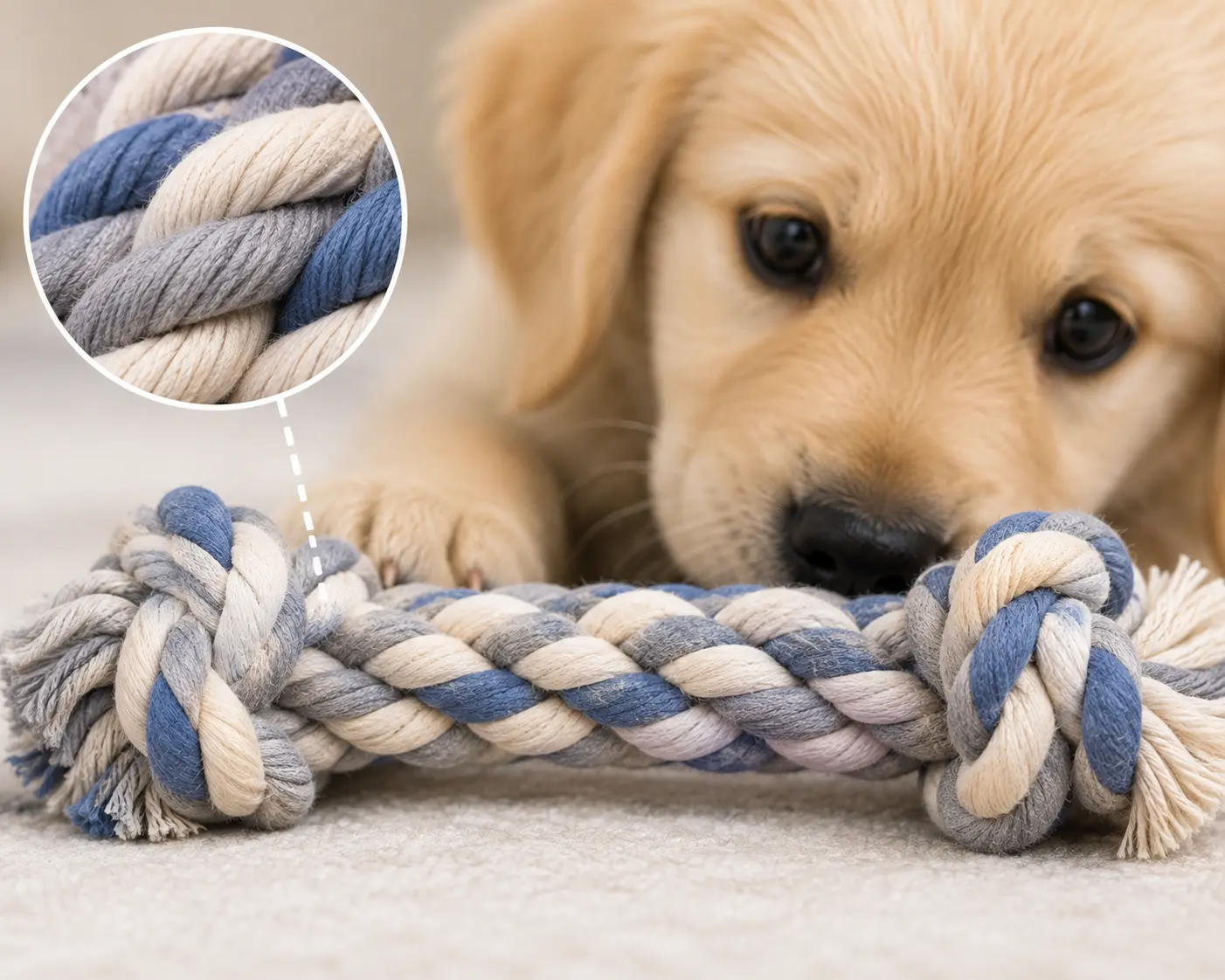
Not all rope suits a teething puppy’s mouth the same way. Thick, tightly wound cotton rope built for adult power chewers can feel harsh against sore, developing gums, while a softer, multi-strand woven cotton holds up to regular gnawing without fighting back too hard. Hand-woven rope with a seamless build, the kind used in soft cotton chew shapes, tends to sit gentler on young gums than a stiff single-strand twist.
A fleece-and-rope combination goes a step further, giving a puppy a plush section to settle into along with rope texture to work their teeth against. The goal isn’t finding the toughest rope on the shelf. It’s finding one soft enough to be comfortable but woven tightly enough that it doesn’t fall apart after a few chewing sessions.
A note on frozen rope toys for teething relief
Some owners dampen a cotton rope toy, wring it out, and freeze it for a few hours to offer extra relief during a rough teething stretch. The cold can help numb sore gums the same way a chilled washcloth might. This works best with plain cotton rope rather than fleece-combination toys, and it’s still meant for supervised chewing, not something to leave with your puppy unattended.
Best dog rope toys for puppies: matching size and play style
An interactive puppy toy earns its keep by giving your puppy more than one way to engage with it, whether that’s carrying, tugging, chewing, or all three. The right shape and size still depends on what your puppy actually does with a toy.
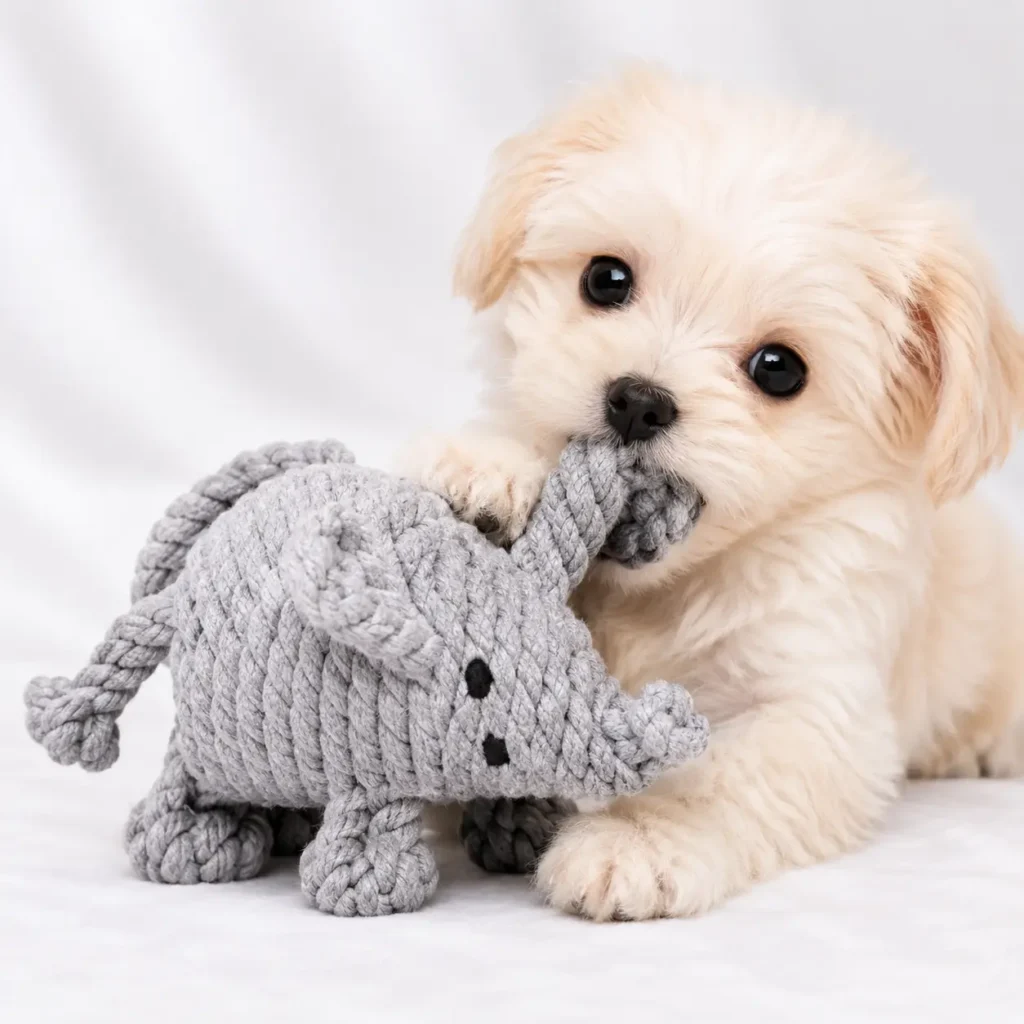
A lightweight, animal-shaped cotton toy, like a hand-woven elephant (23 cm), giraffe (20 cm), duck (15 cm), or carrot (21 cm) design, gives smaller mouths something easy to carry and gnaw on without much heft to wrestle with. For a gentler chewer who tends to go through toys fast, a set of three cotton rope carrot toys means there’s always a fresh one ready, and the smaller, tapered shape at about 9 inches suits a puppy’s grip well.
If your puppy likes to switch between textures, a rope toy with a firmer rubber-textured ball attached, about 10 inches (26 cm) long, gives them a second thing to gnaw on once they get bored of plain rope, and it’s light enough for puppies to carry around on their own. For puppies who respond to sound during solo play, a soft fleece-and-rope toy with a built-in squeaker, around 13 inches (34 cm) long, can keep them engaged without you needing to actively play along.
Sizing matters too: a smaller double-knot rope toy, about 6 inches (15 cm), suits a young puppy’s current jaw size better than the longer 8-inch (21 cm) version meant for a dog with more grip.
At a glance:
- Animal-shaped cotton toy — natural cotton, hand-woven — elephant 23 cm (9.1 in), giraffe 20 cm (7.9 in), duck 15 cm (5.9 in), carrot 21 cm (8.3 in) — best for small mouths and light carrying
- Cotton rope carrot (3-pack) — cotton rope, multi-strand braid — about 9 inches — best for gentle chewers who go through toys fast
- Rope with rubber ball — cotton rope and textured ball — about 10 inches (26 cm) — best for puppies who like switching textures
- Squeaky fleece-and-rope toy — fleece body, cotton rope legs — about 13 inches (34 cm) — best for puppies who like sound during solo play
- Double knot rope toy — cotton rope — 6 inches (15 cm) or 8 inches (21 cm) — best for matching toy length to your puppy’s current size
Keeping rope toy play safe for a puppy
Supervision matters even more with a puppy than with an adult dog, simply because their chewing habits are still forming and less predictable. Get in the habit of checking the rope regularly for fraying, loose threads, or a squeaker starting to work its way loose, and don’t wait for obvious damage before stepping in.
Once you notice real wear, retire the toy rather than letting your puppy keep working at a loose piece. With very young puppies especially, keep tug-of-war gentle rather than letting them dangle or yank hard, since their teeth and jaw are still developing and rough pulling carries more risk at this stage than it does for an adult dog.
Which puppies a rope toy is (and isn’t) right for
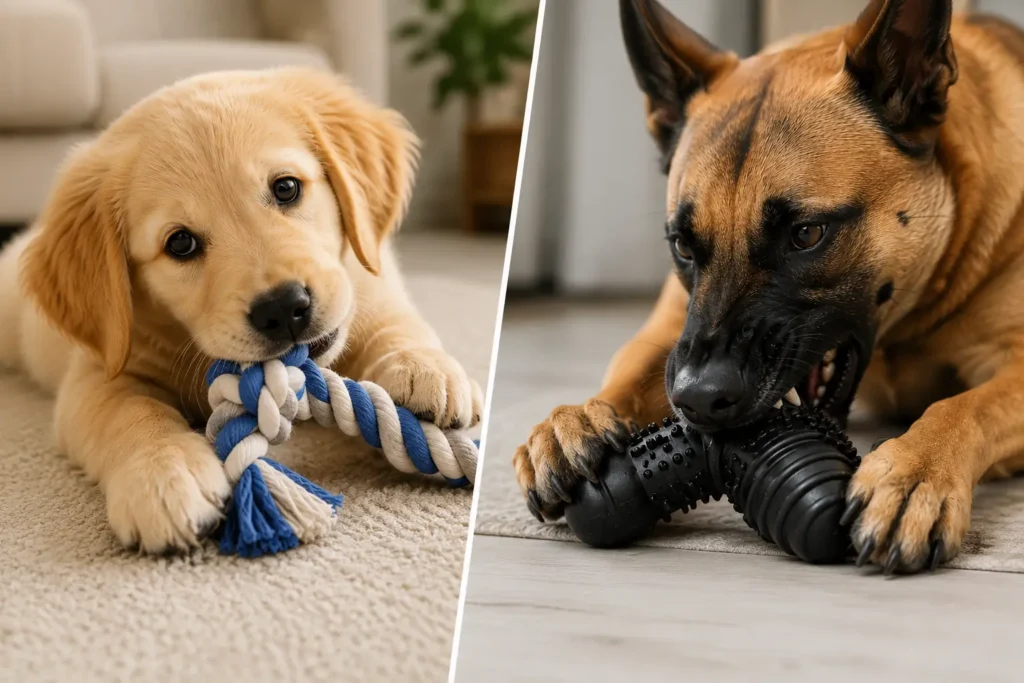
A soft rope toy tends to suit puppies who chew gently to moderately and enjoy carrying, tugging, or gnawing under your supervision. It’s a different story for a puppy that shreds fabric quickly and tries to swallow what comes loose. No amount of soft construction changes that risk once a puppy is determined to pull a toy apart. Some veterinary sources take an even firmer stance and recommend skipping rope-style toys altogether for dogs that chew aggressively, pointing instead toward solid rubber chews that don’t break into long strands.
The honest answer is that this comes down to your individual puppy’s chewing style more than their age. A calm chewer at 10 weeks old might do fine with supervised rope play, while a determined shredder at 6 months might need a completely different kind of toy. If your puppy turns out to be the second kind, our guide to Dog Rope Toy for Aggressive Chewers covers toys built for tougher chewing.
Frequently asked questions
Are rope toys safe for puppies?
They can be, as long as play is supervised and the rope stays in good condition. The real risk isn’t the toy itself, it’s a puppy swallowing loose fibers from a rope that’s already frayed or coming apart, so regular checks matter more than the material alone.
What's the difference between a puppy rope toy and a regular rope toy?
A puppy rope toy is generally softer, lighter, and smaller than one built for an adult dog’s stronger bite, often using thinner cotton strands or a fleece combination instead of the thick, tightly wound rope made for heavy chewing. Adult-oriented rope toys are built to withstand more force, which can feel harsh on a puppy’s developing gums and teeth.
Can rope toys damage a puppy's baby teeth?
It’s possible, mainly if a puppy gets a sharp baby tooth caught in the rope during rough tugging. Keeping play gentle and avoiding hard yanks, especially with very young puppies, lowers that risk considerably.
How often should I replace a puppy's rope toy?
There’s no fixed schedule. Once you see fraying, loose threads, or a knot working itself loose, it’s time to swap in a new one rather than waiting for it to fall apart fully.
Should puppies play tug-of-war with rope toys?
Gentle tug can be fine, especially once a puppy’s permanent teeth are further along, but rough yanking or letting a puppy dangle from the rope isn’t a good idea at any age. Keep sessions light and let your puppy set the pace.
Order your puppy rope toy today
A soft, well-suited rope toy gives your puppy something appropriate to chew on while their teeth are still coming in. Browse our full Dog Rope Toys collection to find the right fit for your puppy.
Pingback: Large Dog Rope Toy Guide: Size, Material, and Safety Basics
Pingback: Are Rope Toys Safe for Dogs? The Honest Answer, Explained
Pingback: Best Animal Shaped Rope Toys for Dogs | Safe Pet Place
Pingback: Best Rope Ball Toy for Dogs: Sizing, Safety & Care Guide
Pingback: Rubber Dog Toys vs Rope Dog Toys
Good and expert topic