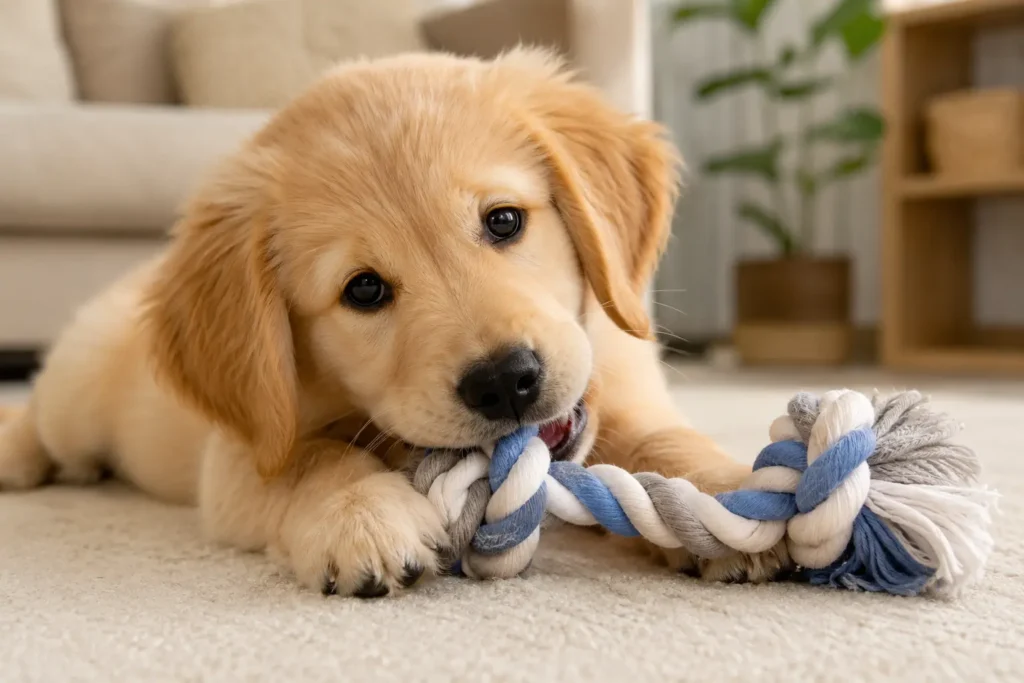
Are plush dog toys safe? For plenty of dogs, yes, as long as the toy is in good shape, your dog plays gently, and you’re keeping an eye on things. For a dog who goes straight for the seams, the answer changes fast.
Some dogs carry a soft toy from room to room like a favorite blanket. Others treat it like a demolition project and don’t stop until the stuffing is on the floor and the squeaker is out. Which kind of dog you have matters more than the toy’s price or how cute its face is.
This guide covers who should skip plush, what makes one risky, what to check before you buy, when to retire a toy, and what to do if something gets swallowed.
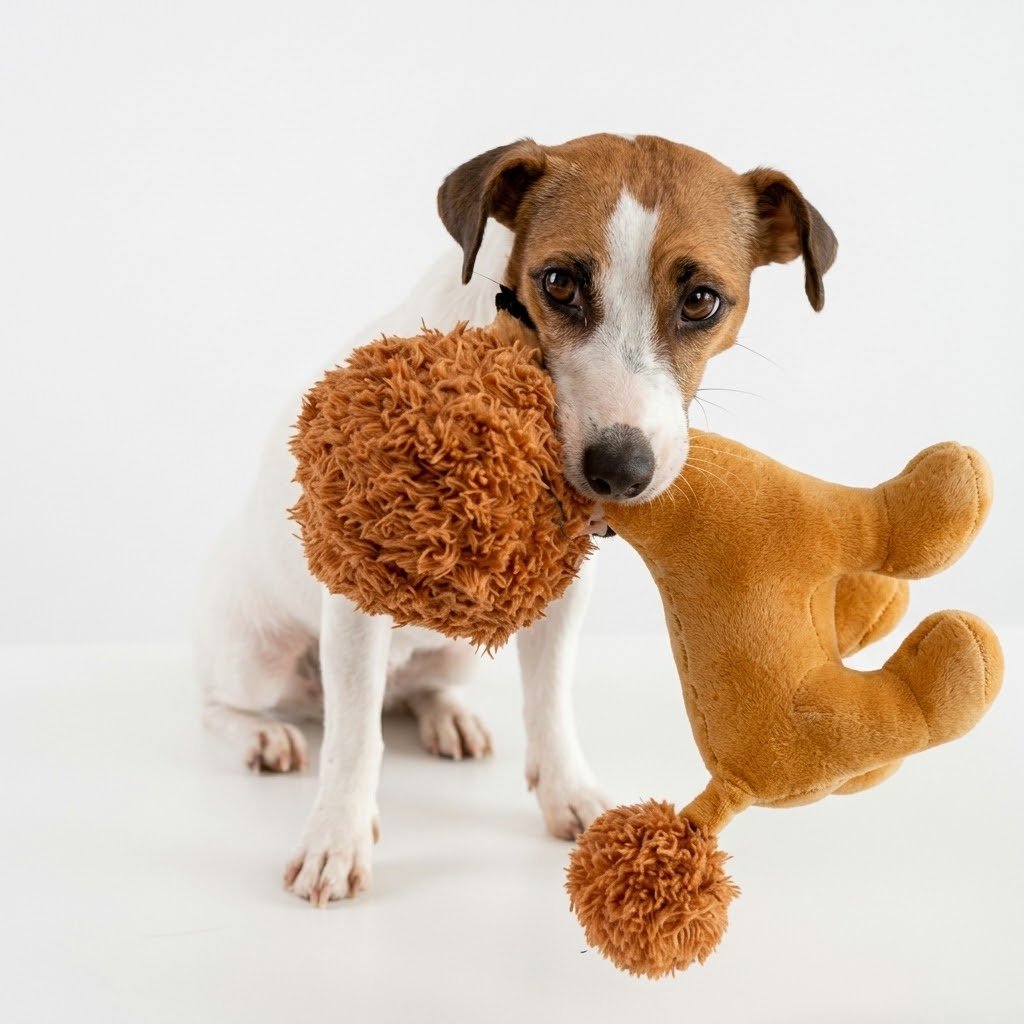
Are Plush Dog Toys Safe? It Depends on How Your Dog Plays
Plush dog toys can be safe for dogs who play gently, as long as you supervise and replace the toy once it starts coming apart. They’re a poor match for dogs who tear, shred, or swallow what’s inside.
Three things decide which side your dog falls on. First, how your dog uses the toy: carrying and cuddling is a very different habit from ripping and gutting. Second, the toy itself, including how well it’s sewn, what’s inside, and what shape it’s in today. Third, whether you’re around to watch, because a toy that has started to come apart is much riskier when nobody’s looking.
It helps to think of plush toys as comfort and carrying toys, not chew toys. Fabric and stuffing aren’t built to stand up to serious chewing, no matter how soft the toy is.
You’ll also see this question asked as “are stuffed animals safe for dogs?” The same reasoning applies. The American Kennel Club’s (AKC) toy-shopping guide treats stuffed toys as a matter of the individual dog.
Which Dogs Should Skip Plush Toys (and How to Tell)
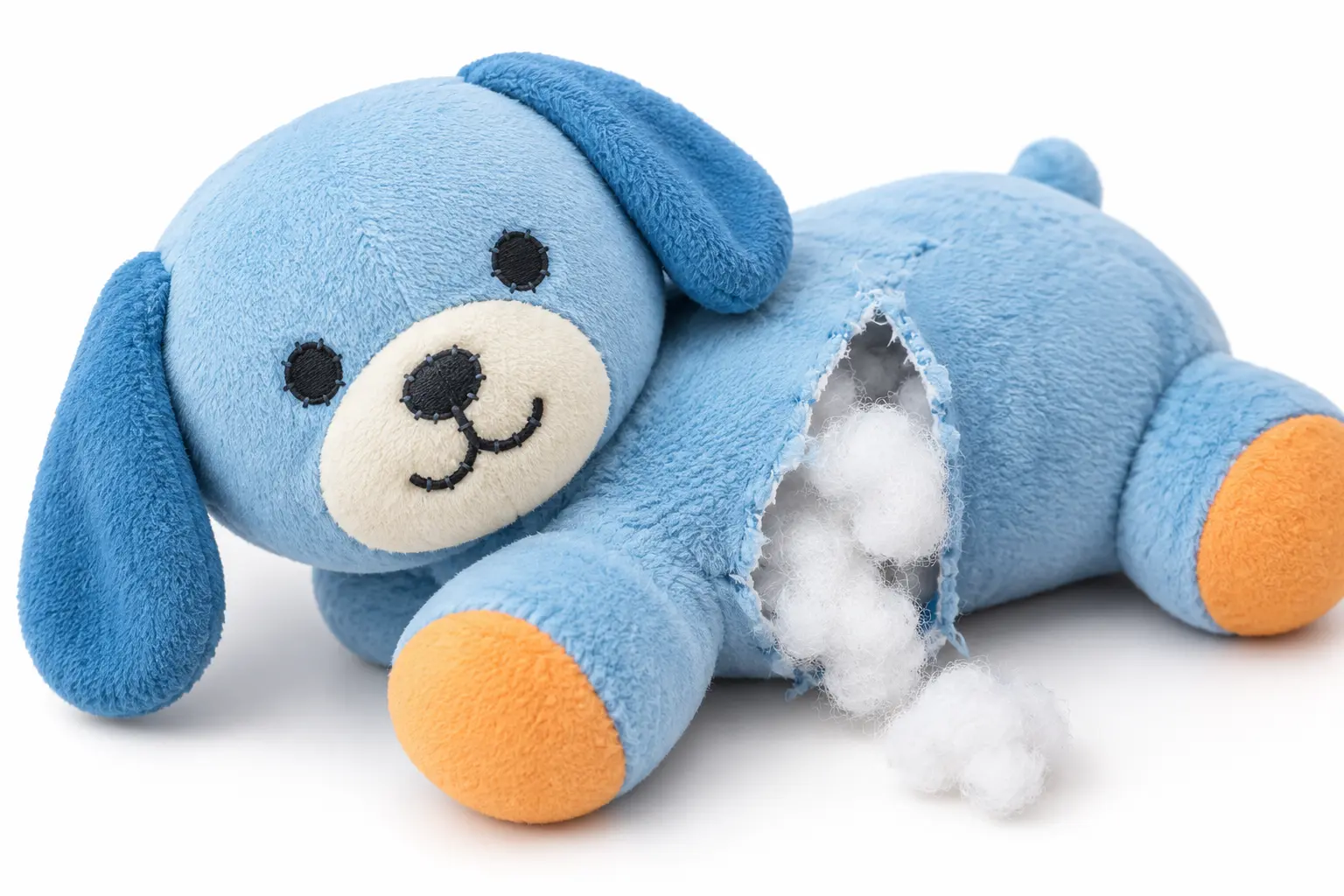
Dogs who tear seams, pull out stuffing, dig out squeakers, or swallow pieces are poor fits for plush toys. If that sounds like your dog, a different kind of toy is a better bet.
You don’t need a formal test to find out where your dog stands. Just watch how your dog treats soft toys. A dog who carries a toy around, cuddles it, or mouths it softly is using it the way plush toys are meant to be used. A dog who goes after the seams, digs at the filling, or works on the squeaker until it’s out is doing something else.
The AKC says dogs who consistently destroy stuffed toys may be better off without them. Veterinary guidance from Hepper points the same way: dogs who keep pulling out and eating stuffing may do better with food puzzles or rubber toys.
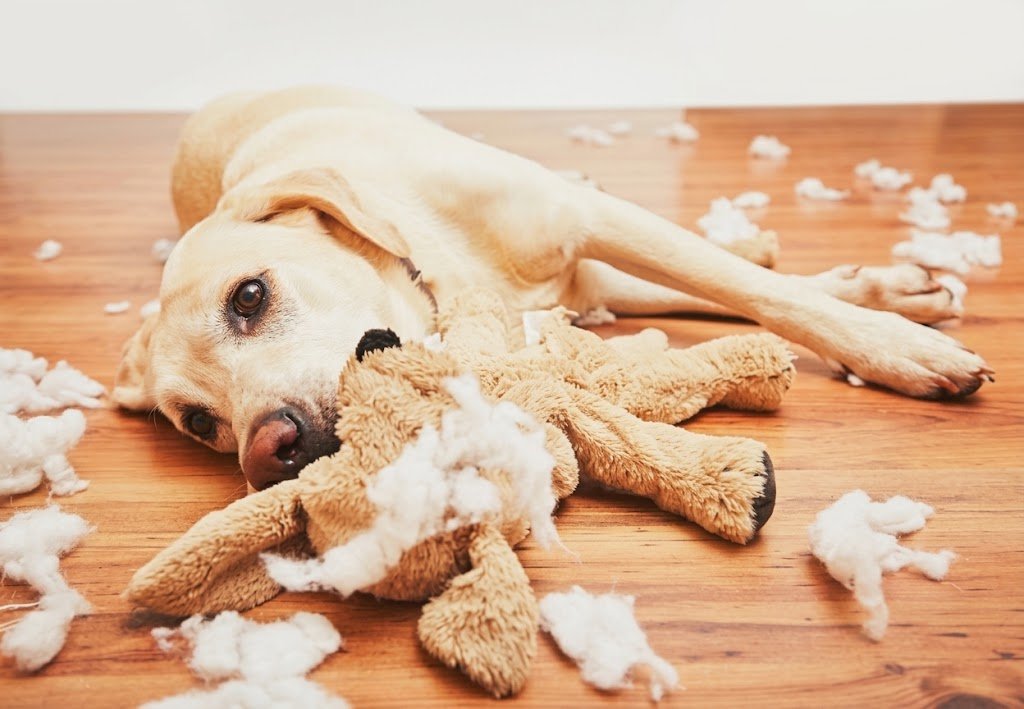
Has your dog already shredded a plush toy? Take it away, pick up the pieces, and check whether anything is missing. When you can’t account for the stuffing or a squeaker, go straight to the final section on what to do if your dog swallows stuffing or a squeaker. Then think twice about handing that dog another one.
Plush toys for aggressive chewers are generally the wrong category. Our guide to durable rubber toys for aggressive chewers is a good place to start, and our post on how to choose a rubber chew toy based on your dog’s bite strength can help you match a toy to the way your dog actually chews.

What Makes a Plush Toy Risky: Stuffing, Squeakers, Seams, and Small Parts
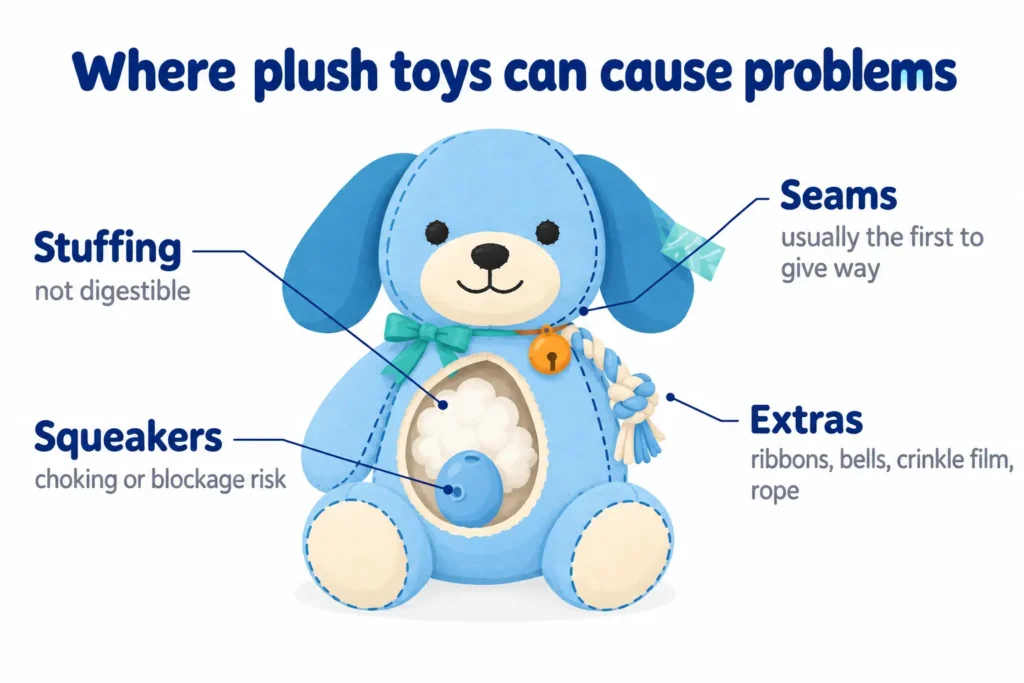
Most of the risk in a plush toy comes down to four things: what’s inside, what makes noise, where it’s sewn together, and what’s attached.
Stuffing. Can dogs eat toy stuffing? They shouldn’t. Dogs can’t digest it, and what happens after a dog swallows some depends on the dog’s size and how much went down. That’s a call for your vet, and the last section covers what to do.
Squeakers. A swallowed squeaker can cause choking or a blockage, and a chewed one can have sharp edges that can injure the digestive tract, according to a veterinarian writing for Dogster. The AKC also advises against letting your dog remove a squeaker and chew on it.
Seams. These are usually the first place a plush toy starts to give way. Once one opens, the stuffing, squeaker, or other filling is within reach.

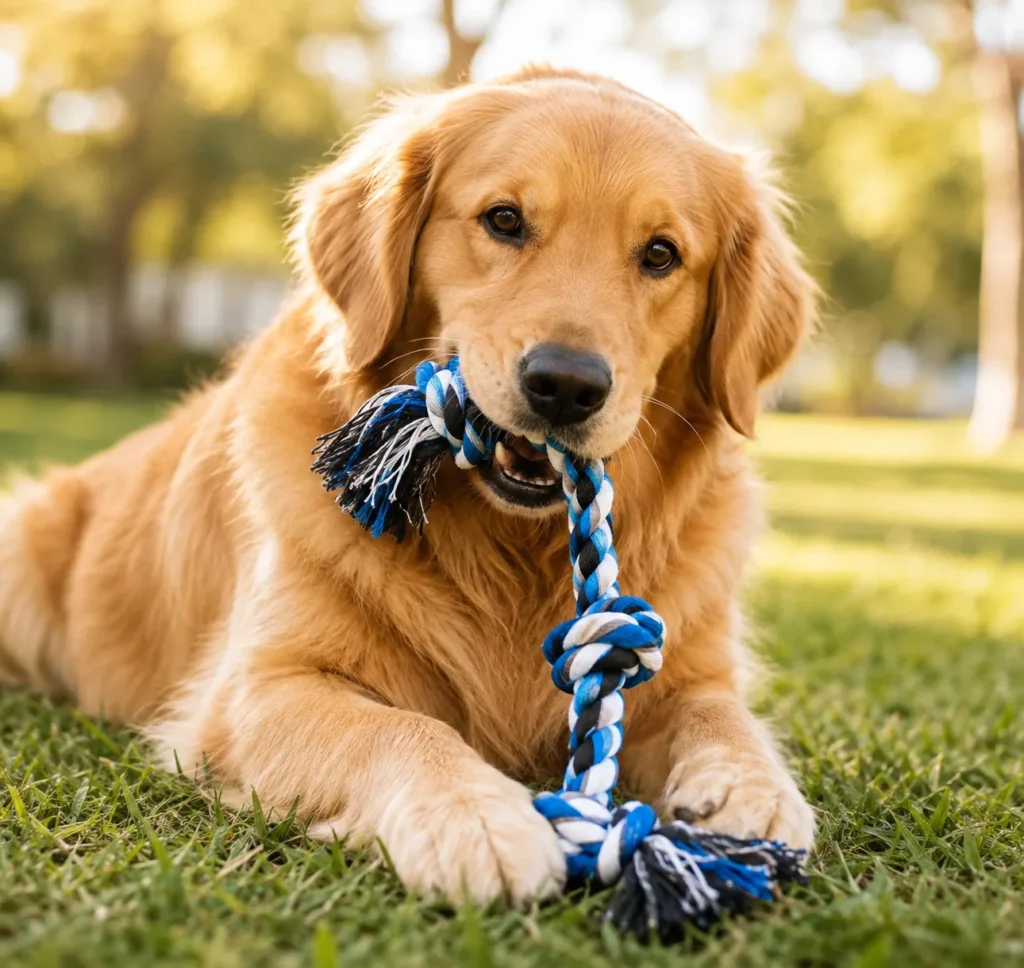
Extras. Ribbon loops, bells, crinkle film, and rope pieces add more places to wear out, loosen, or end up exposed once the fabric tears. Ribbon and string-like pieces deserve extra attention: Cornell’s veterinary school says they can cause more severe damage than other swallowed objects. Rope pieces fray in their own way, and our guide to rope toy safety covers what to look for.
Stuffing-free and squeaker-free labels. Each takes away one hazard. A stuffing-free toy has no loose filling, but it can still have a squeaker or crinkle material inside. A squeaker-free toy has no squeaker to dig out, but it may still be full of stuffing. Neither label means a toy is risk-free.
Plush Toys for Puppies and Small Dogs
Are plush toys safe for puppies? They can be, with the right size and your supervision. Puppies still need a toy made for chewing, though, because soft toys are for carrying and cuddling.
Size matters more with puppies and small dogs for two reasons. A toy that fits entirely inside your dog’s mouth is a choking concern. And the same amount of stuffing is a bigger deal for a small dog than a large one, because what counts is the amount compared with the dog’s size.
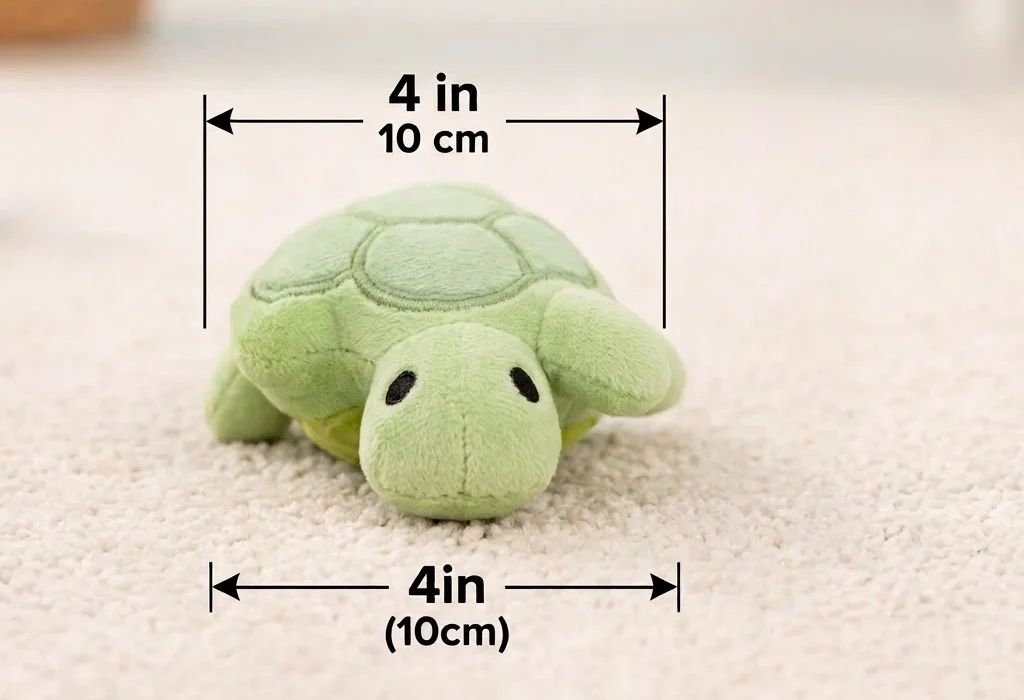
Pick a toy sized for your dog, not just the cutest one on the page. Our mini turtle plush toy, for example, is about 4 inches long and made for puppies and small toy breeds. The product page is clear that it isn’t meant for medium or large dogs, because a bigger dog can take the whole toy into its mouth. With dogs of different sizes at home, keep a toy like that with the smallest dog and stay nearby during play.
What to Check Before You Buy a Plush Dog Toy
A few quick checks help you choose a safe plush dog toy before it ever reaches your dog.
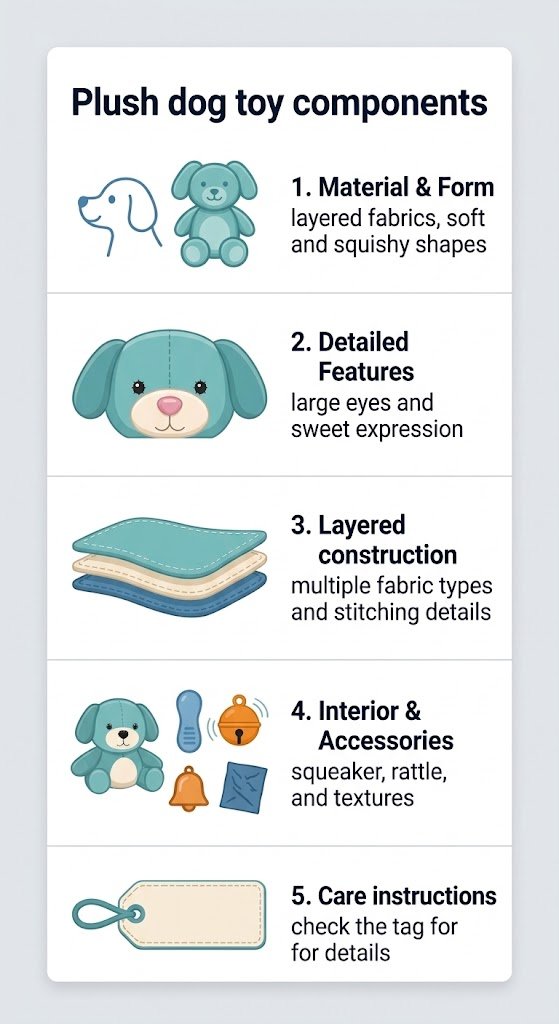
- Size. Choose one that’s too big to fit entirely in your dog’s mouth but still easy to carry.
- Facial features. Look for eyes and noses that are stitched or embroidered instead of attached. That means fewer parts that can come loose.
- Construction. Some toys use two layers of fabric or double-line stitching around the edges. Those are construction details, not a promise that the toy will hold up to chewing.
- What’s inside. Check whether the toy has a squeaker, a bell, crinkle paper, stuffing, or none of those. A product page that names the internal parts makes this easy.
- Care instructions. Look for them on the product page. They vary from toy to toy.
Stuffing-free and squeaker-free designs help with one hazard each, as covered above, but not with all of them. Our stuffing-free plush octopus has no stuffing, but it still has a squeaker in the head and crinkle paper in its six legs. The product page is upfront that it’s a plush fabric toy, not an indestructible chew toy, so it needs supervision and should come out of rotation if it’s damaged.

How to Inspect a Plush Toy and When to Retire It
Give plush toys a quick once-over regularly, especially after they’ve seen some chewing. Look for:
- Gaps or loose threads along the seams
- Holes or thin spots in the fabric
- Stuffing or a squeaker showing through
- Anything that has loosened or come off, such as an ear, a ribbon, or a bell
Once stuffing or a squeaker is exposed, take the toy away and throw it out. The AKC and Hepper’s veterinary guidance both say to get rid of a stuffed toy at that point.
It’s tempting to sew a torn toy back together. We’d replace it instead. A repaired seam is one more spot you’ll have to keep watching, and the stuffing or squeaker may already have shifted. Sources are split on repair versus replacement, so this is our recommendation.
When to throw away a plush dog toy comes down to condition, not age. There’s no set number of weeks a plush toy lasts, so let what you see decide, not the date you bought it. And put plush toys away when you can’t watch your dog. A toy that’s starting to fail is the one to keep out of an unsupervised mouth.

What to Do If Your Dog Swallows Stuffing or a Squeaker
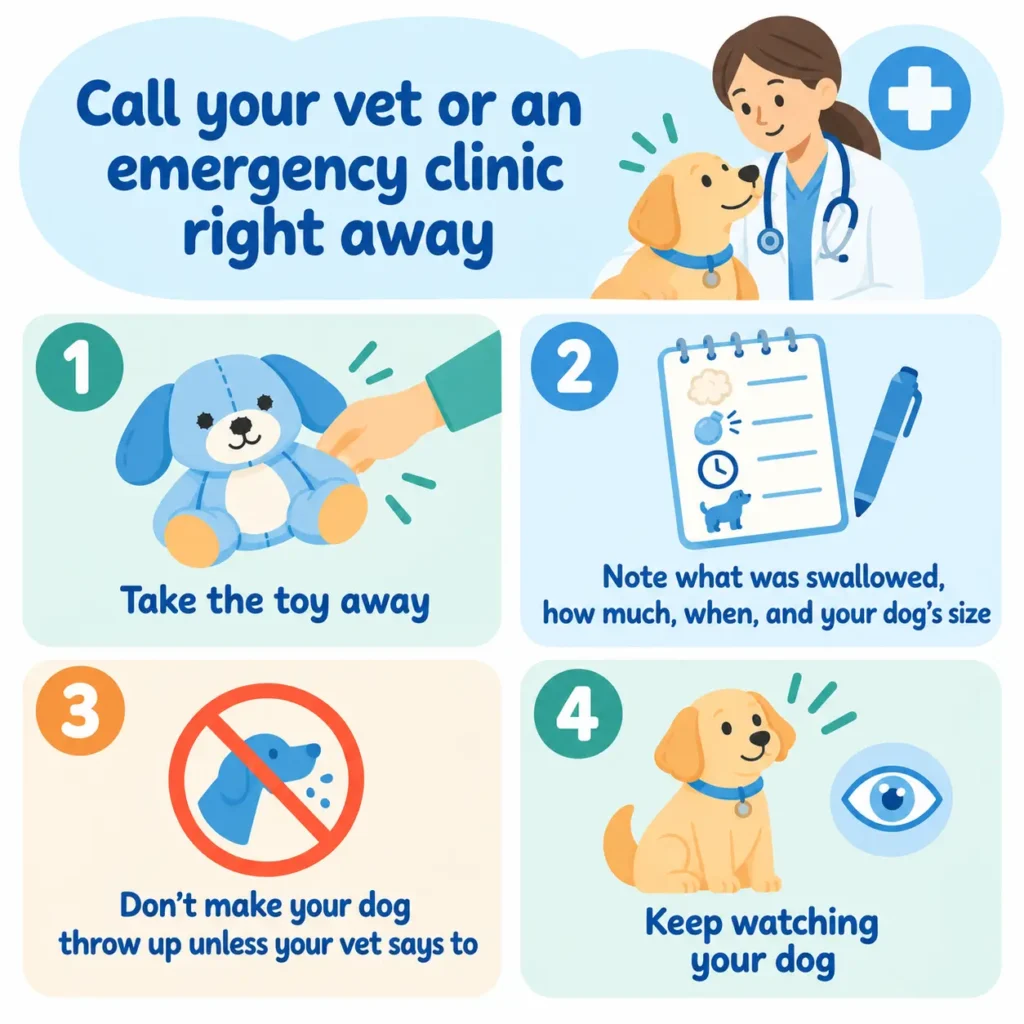
Call your veterinarian or an emergency clinic right away if you think your dog swallowed stuffing or a squeaker. Cornell’s College of Veterinary Medicine calls a blocked digestive tract an emergency and says prompt veterinary care is critical to the best outcome. It’s a stressful moment, but a quick call is the right first step.
While you’re getting help:
- Stay calm and take the toy away so your dog can’t eat more.
- Gather what you can: what was swallowed (stuffing, a squeaker, or both), roughly how much, when it happened, and your dog’s size. Your vet will ask.
- Don’t try to make your dog throw up unless your vet specifically tells you to. Veterinarians writing for Hepper and Dogster both give that advice.
- Keep watching your dog after the call.
Tell your vet if you see any of these:
- Repeated vomiting
- Loss of appetite
- Unusual tiredness
- Diarrhea
- Straining to poop or not passing stool
- A painful or swollen belly

Gagging, choking, or trouble breathing is an emergency, so head to the nearest emergency clinic right away.
What happens next depends on your dog’s size and what was swallowed. A small amount of stuffing can pass without trouble, but that’s for your vet to decide. For a small object that isn’t causing a full blockage, a vet may choose hospital monitoring. A true blockage usually needs surgery.
So, are plush dog toys safe? For a gentle dog, with a well-made toy in good condition and you watching, they can be. For a dog who shreds, they’re usually the wrong choice. Check how your dog treats soft toys, give every plush toy a regular once-over, and call your vet if something gets swallowed.
Ready to pick one out? Browse our plush dog toy collection and compare sizes and details on each product page.
Frequently Asked Questions
Why do dogs destroy plush toys and rip out the stuffing?
Mostly instinct. Tearing a plush toy apart mimics how a dog’s ancestors handled prey: grab, shake, tear, and take it apart, and a squeaker adds to the effect. Trainers and behavior writers call this normal, and it doesn’t by itself mean a dog is aggressive or stressed.
How do you wash plush dog toys?
Check the care label or product page first. Some plush toys can be machine washed in a mesh bag on a gentle cycle, others are hand-wash only, and some instructions say to skip the dryer since high heat can damage a squeaker.
What are plush dog toys filled with?
It varies by toy. Product pages list fills such as PP cotton, polyester fiberfill, and fiber stuffing, and some toys have no stuffing at all.
Are squeaky plush toys safe for dogs?
They can be for gentle dogs, but treat them as supervision-only toys. The San Diego Humane Society’s toy guide warns that a dog may try to find and destroy a squeaker and swallow it. A squeaker-free plush toy removes that particular hazard.
Are stuffed animals made for people safe for dogs?
A toy made for dogs is the better pick. People’s stuffed animals can have eyes, ribbons, or strings that a dog can chew off and swallow, and the same guide says to remove parts like that. It also suggests looking for a “safe for children under three” label, though even safe stuffing isn’t digestible.