Best Rope Ball Toy for Dogs: A Buying Guide for Tug, Fetch, and Everyday Play

Finding the best rope ball toy for dogs comes down to matching the toy to how your dog plays — tug one minute, fetch the next. This guide covers picking the right size, deciding if a rope ball toy fits your dog’s chewing style, and keeping it clean once it’s covered in slobber and backyard dirt.
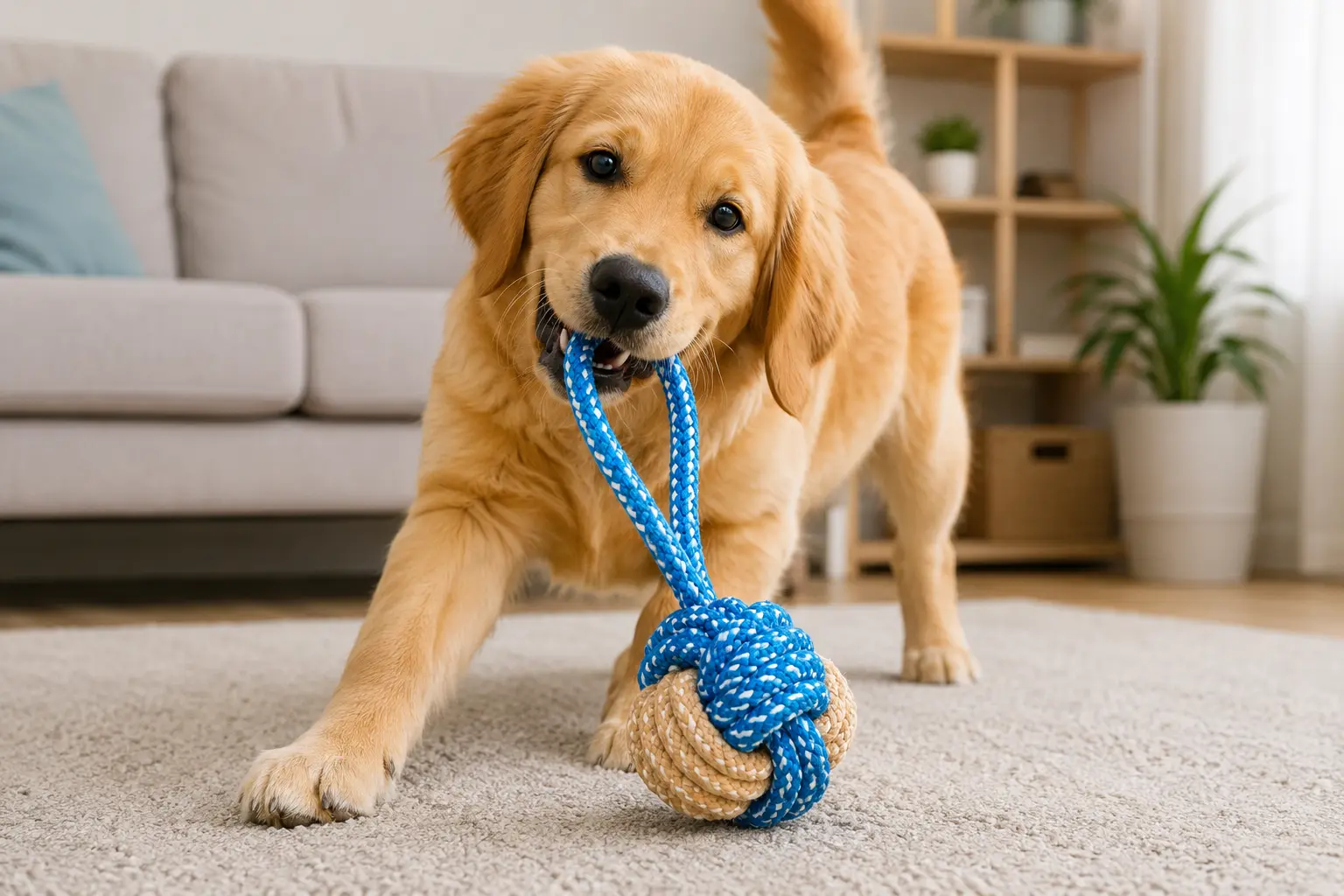
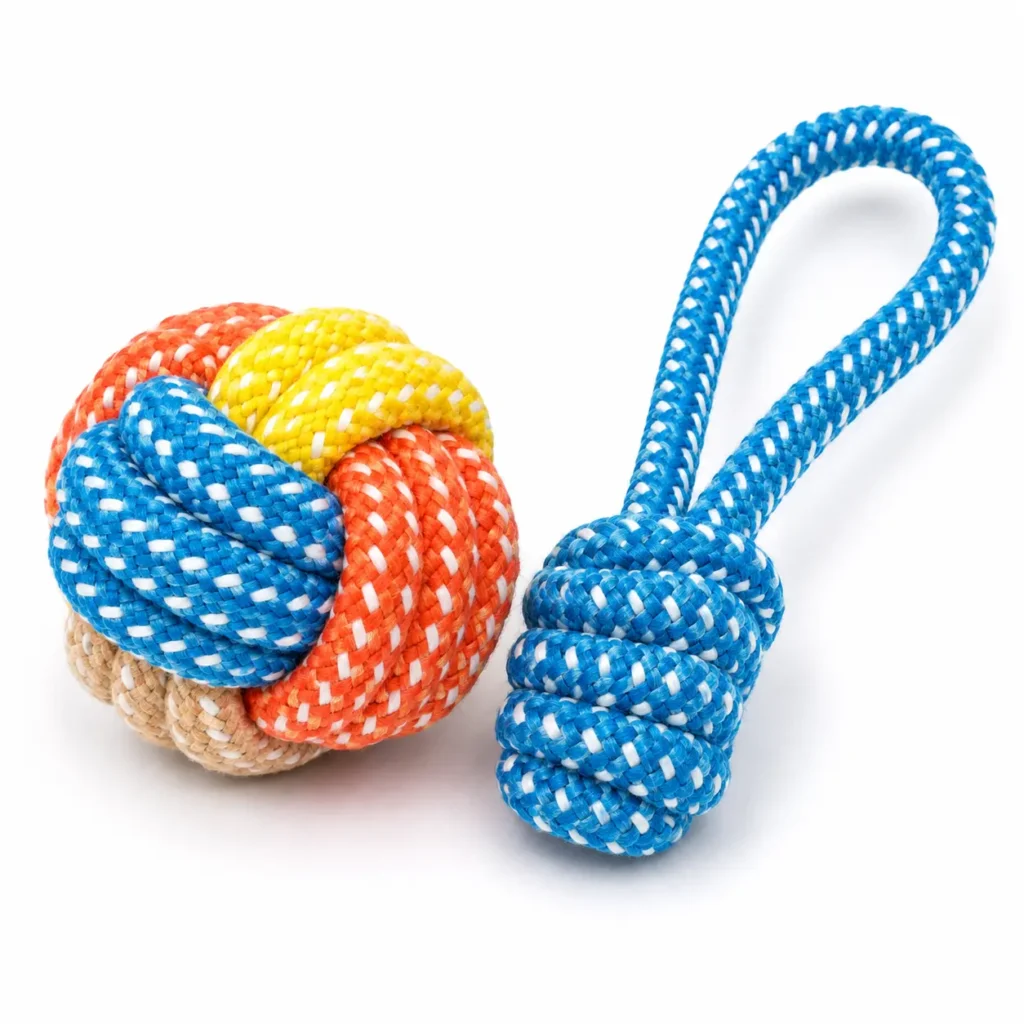
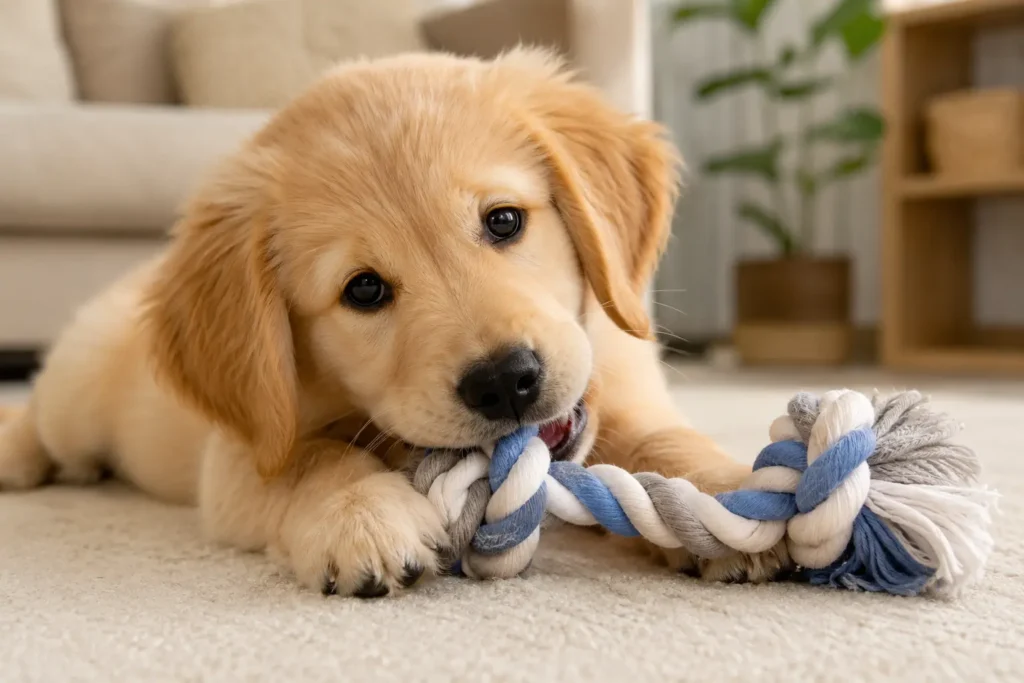
Golden retriever puppy playing tug with the best rope ball toy for dogs

What a Rope Ball Toy Is Actually Good For

If your dog switches between wanting to tug on something and wanting to chase something, a plain rope toy or a plain ball only covers half the job. A rope ball toy ties both together — a knotted cotton rope on one end, a ball-shaped chew section on the other, so the same toy handles a round of fetch and a round of tug-of-war without you swapping anything out.

It’s a genuinely different toy from a straight rope or a solid ball, not just a marketing mashup. The rope gives your dog something to grip and pull against; the ball section gives their jaw something firmer to work on between rope sessions. Dogs that get bored fast with one texture often stick with this kind of toy longer, simply because there’s more than one thing to chew on.

Finding the Right Size for Your Dog

Rope ball toys aren’t one-size-fits-all, and getting the size wrong is more than a fit issue — a toy that’s too small for your dog’s mouth can become a choking hazard, especially mid-fetch. As a general guideline, dogs over about 35 pounds need a larger ball and thicker rope than what works for a small or toy breed.

Two things matter before you buy: your dog’s current weight, and how hard they typically chew. A toy sized right for a calm 15-pound terrier won’t hold up — or fit safely — for a 60-pound retriever, even if both get called “medium energy.” We carry a compact rope-ball build made for puppies and smaller dogs as well as a larger rope-ball option sized for medium and large dogs — full details on both are in the picks section below.

Raising a puppy specifically? Our guide to rope toys for puppies goes deeper on what to look for at that stage. Shopping for a bigger dog, our large dog rope toy guide has more detail on sizing up.
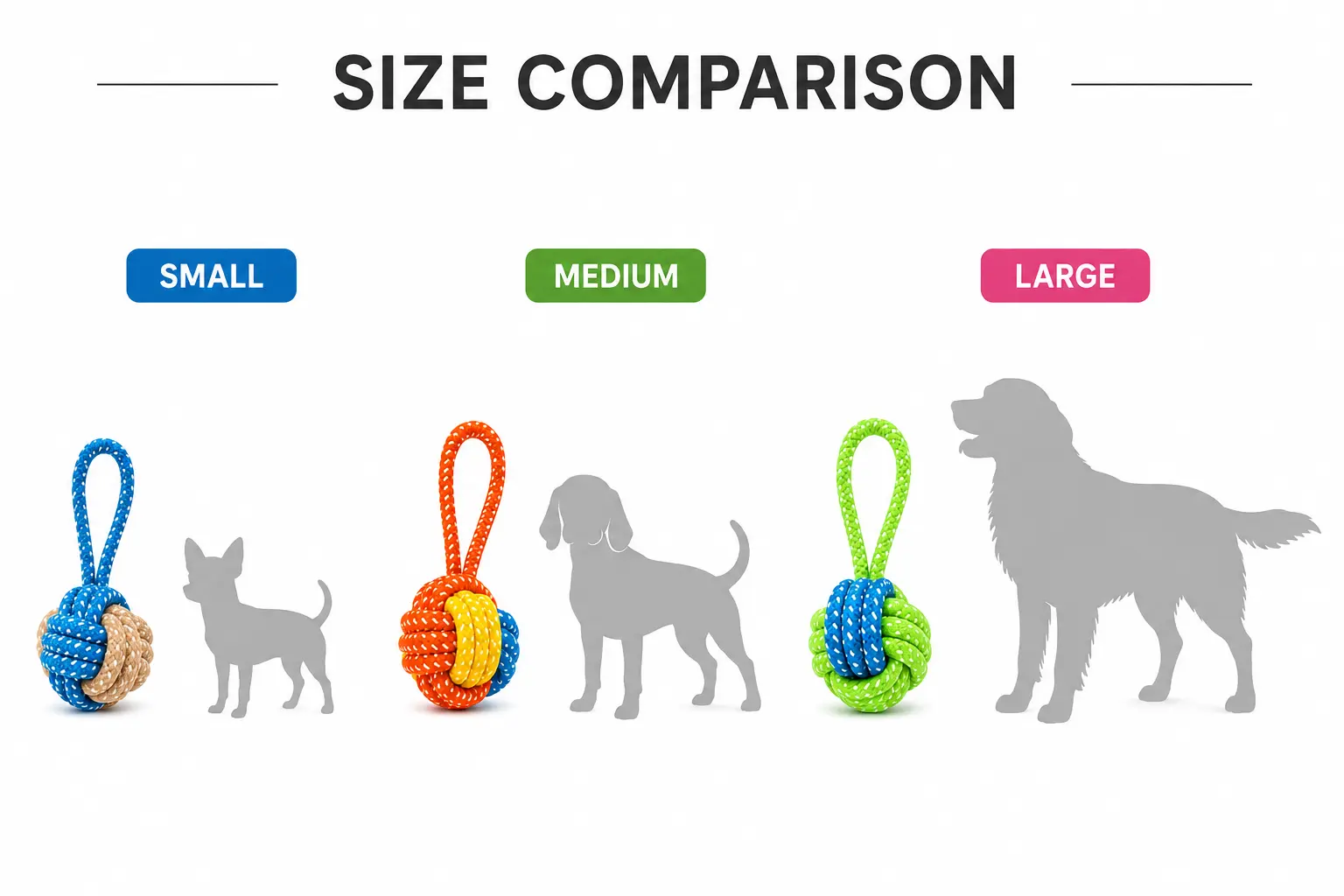
Size comparison chart for rope ball toys across small, medium, and large dogs

Is a Rope Ball Toy Right for Heavy Chewers? (An Honest Answer)

Most rope ball toys, including ours, aren’t built to survive a dog that chews hard and fast — and that’s worth knowing before you buy, not after the rope’s already frayed. Our own listing for the Dog Rope Toy with Ball says as much: it’s made with average chewing habits in mind, not the kind of dog that goes through toys in minutes.

The reason comes down to where the stress lands. During a hard tug session, the rope — not the ball — takes most of the direct pulling force, so it’s usually the rope that frays or comes apart first, even on a well-made toy. The Texas A&M College of Veterinary Medicine has pointed out that rope toys in general carry a real risk of being shredded and swallowed in pieces, which is exactly why supervision matters more with rope toys than with solid rubber or nylon ones.

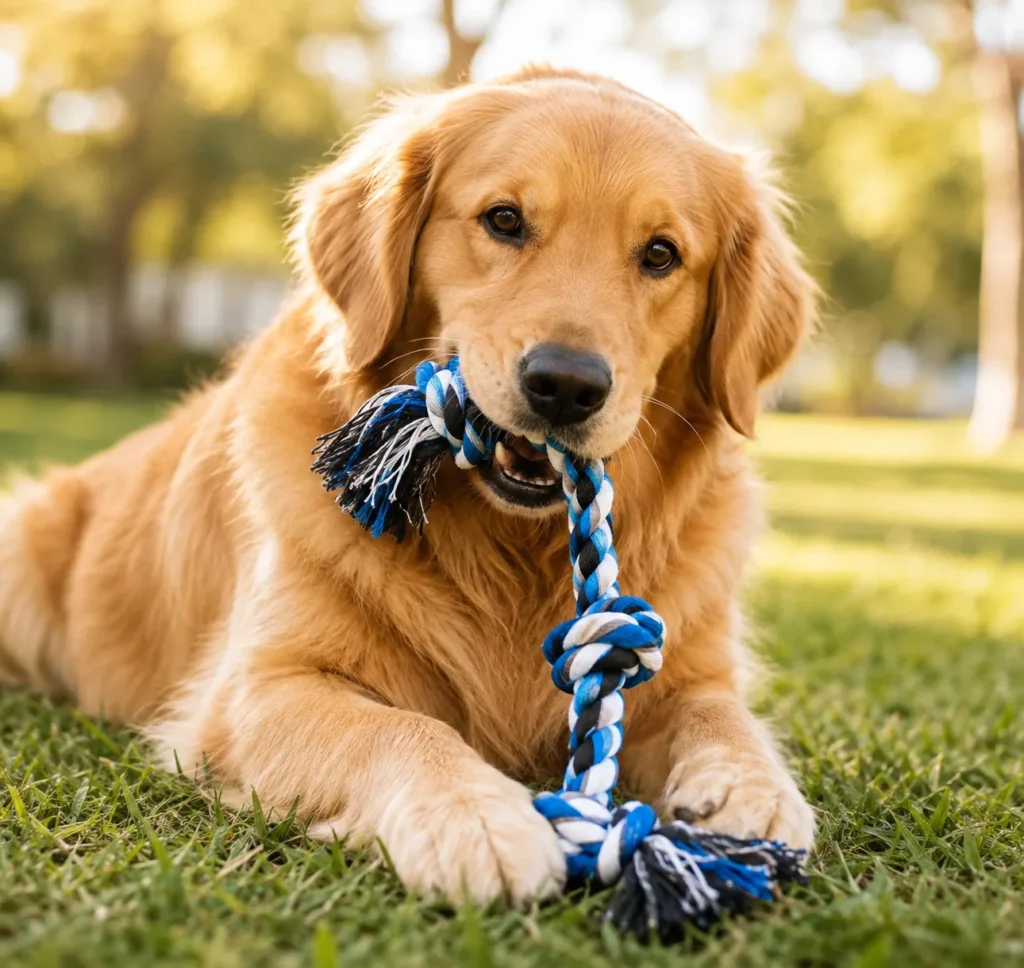
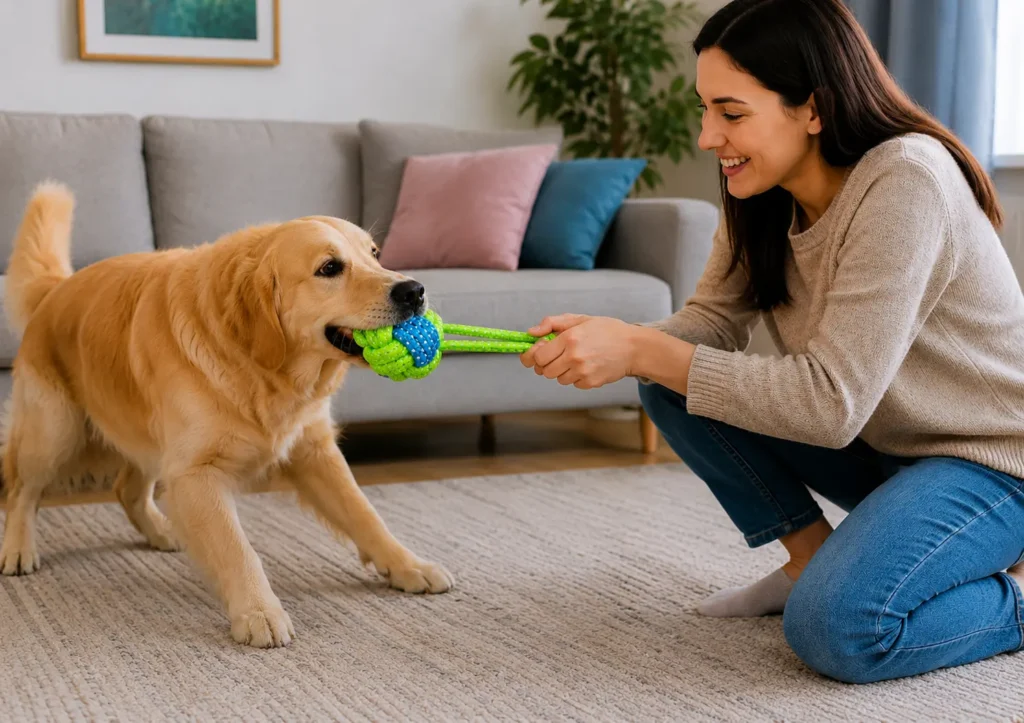
Woman supervising a golden retriever during rope toy tug play

None of this makes rope ball toys unsafe — it means they’re the wrong tool for a specific kind of chewer. If your dog is a known power chewer, our guide to rope toys built for aggressive chewers points you toward sturdier options. For dogs with a more typical chewing style, a rope ball toy works fine as long as you’re around to supervise and you retire it once you see fraying. For the broader safety picture, see are rope toys safe for dogs.

Cotton Rope vs. Biothane/Rubber Rope-Ball Combos

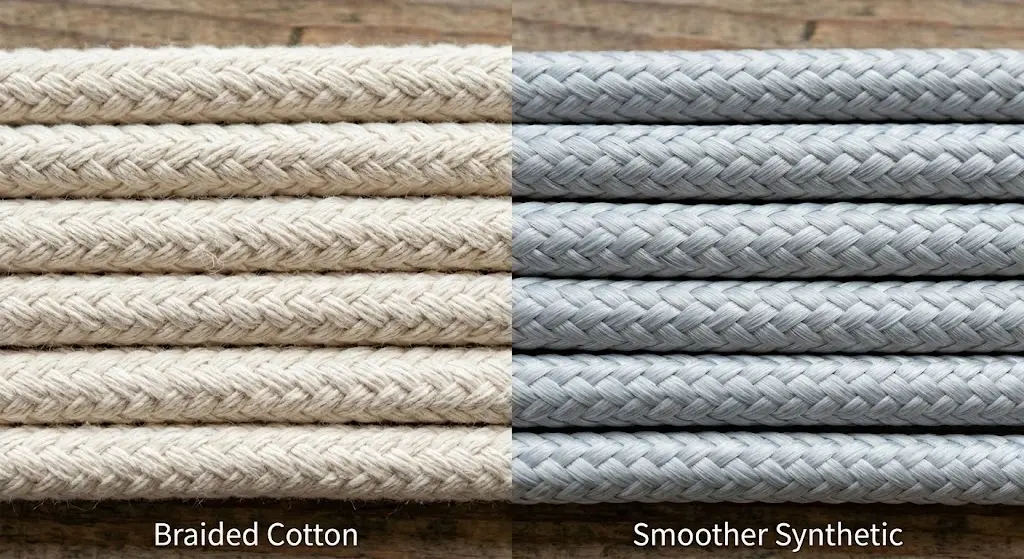
Most rope ball toys, including both of ours, use braided cotton rope. Cotton feels soft and natural — gentle on a puppy’s gums, comfortable to grip during tug — but it holds onto moisture, so it takes longer to dry after a wash and can start to smell if it stays damp too long.

Biothane and rubber-based rope-ball toys exist as an alternative, mostly from smaller specialty makers. Neither material soaks up water the way cotton does, which makes them easier to wipe down and quicker to dry, but they don’t offer the same soft chew texture, and dogs used to cotton sometimes need time adjusting to the firmer feel. If you’re dealing with heavy drooling or messy play, that trade-off may be worth a separate look — we don’t currently carry a biothane option, but it’s a fair alternative to know exists.

If you’re not dealing with either of those issues, there’s little reason to look past cotton — it’s what both of our rope ball toys use, and it’s the standard for good reason.

Cotton rope texture next to a smoother synthetic cord, side by side comparison

Why the Rope Usually Wears Out Before the Ball

On almost every rope ball toy, the ball holds up long after the rope has started fraying. The reason is mechanical, not a flaw in how the toy’s made: the ball section is a single solid piece, so there’s nothing for your dog’s teeth to work loose. The rope is woven from individual fibers, and every tug or bite has a chance to loosen one of those fibers a little more than the last.

Check the weakest point first: where the rope meets the ball. That knot or attachment point takes repeated stress with every pull, so it wears faster than the middle of the rope does. On the Dog Rope Toy with Ball, that ball section has a bumpy, rubber-textured surface, giving your dog a firmer texture to work on between rope sessions.

If the rope frays while the ball still looks fine, that’s normal wear, not a defective toy — retire the whole thing rather than let your dog work a loose thread free. If the ball ever cracks or splits while the rope holds up, treat it the same way: swap out the toy instead of continuing to use half of it.
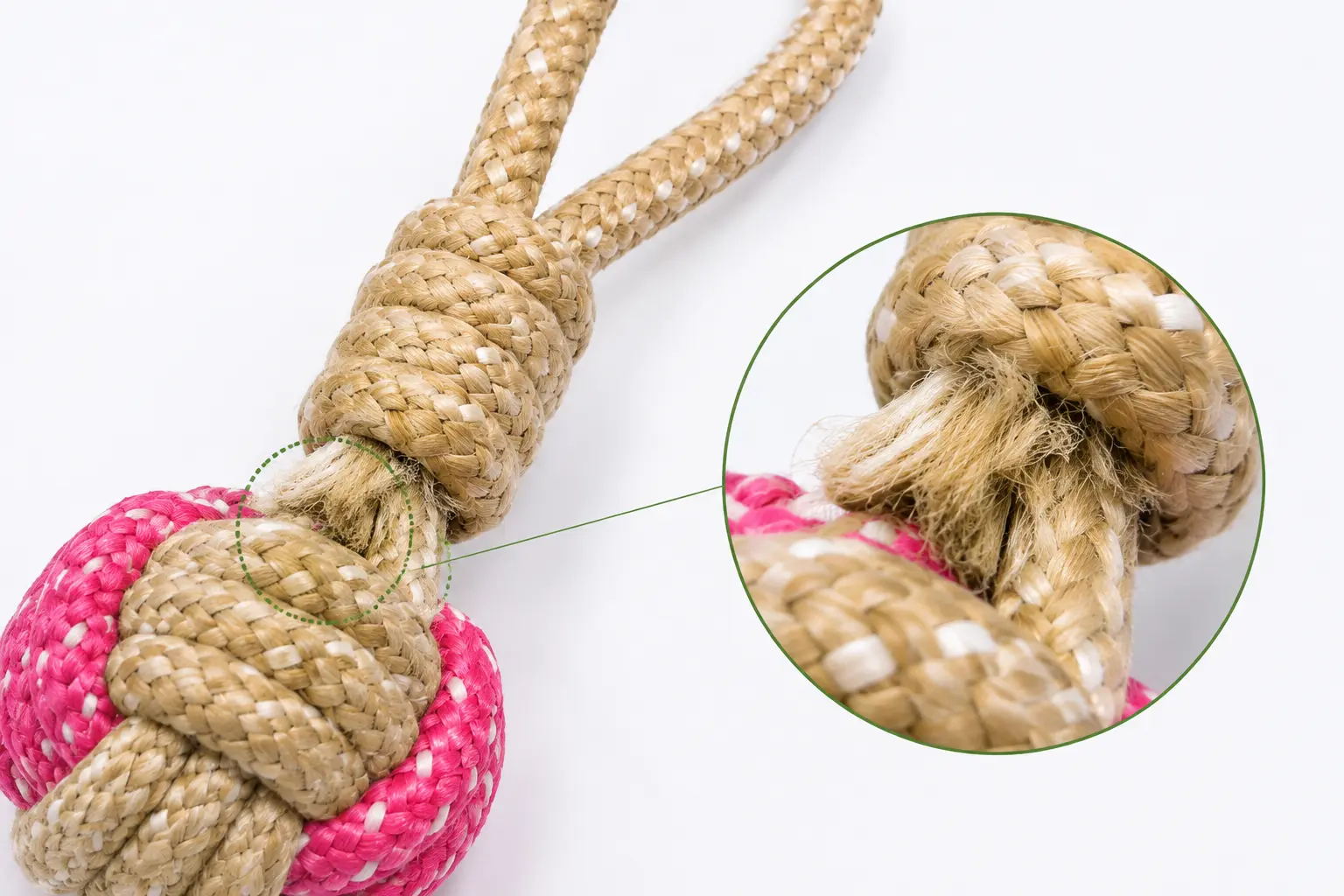
Close-up of a frayed rope-to-ball attachment point on a rope ball toy

Cleaning and Caring for a Rope Ball Toy

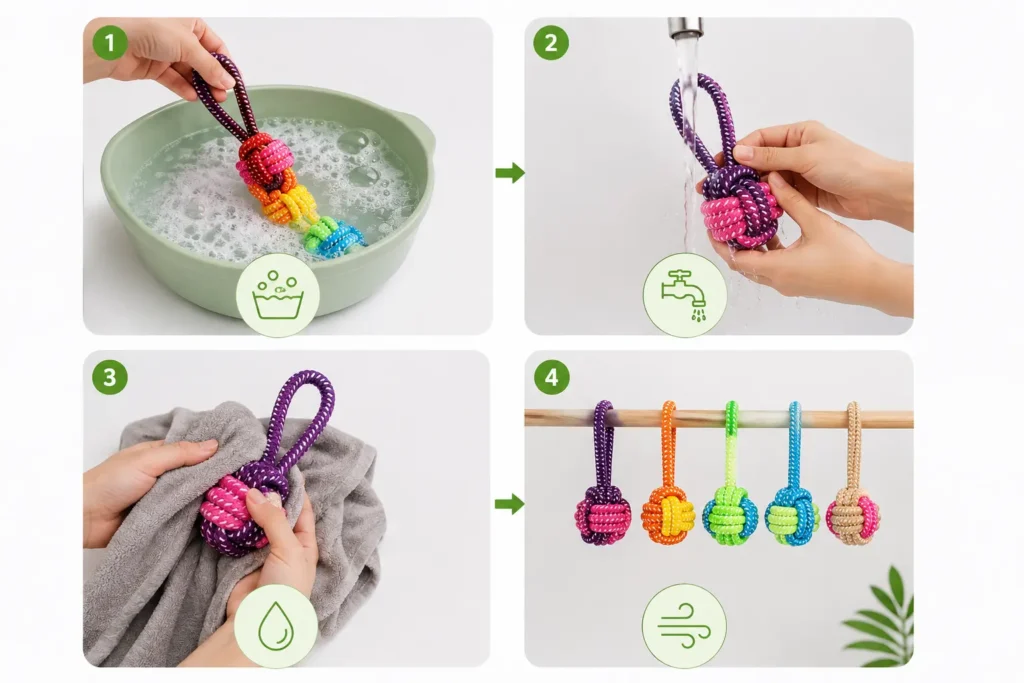
Cleaning a rope ball toy takes one extra step compared to a plain rope toy. Once there’s a ball piece attached — especially anything plastic or rubber — skip the microwave and dishwasher shortcuts sometimes used for all-cotton toys, since heat can affect the ball material differently than it affects the rope. Hand-washing is the safer route for a combo toy like this.

For both of our rope ball toys, the guidance is simple: soap, water, and a full air-dry before your dog plays with it again. No special cleaner needed — a quick rinse after a muddy backyard session usually does the job.

Between washes, check the rope and the attachment point for loose threads or heavy fraying — that’s your cue to replace the toy, not clean it again. As a general habit, inspecting rope toys every 2 to 4 weeks under regular use is a reasonable starting point, though a dog who chews more, or less, than average will move through that timeline faster or slower.

Our Picks: The Best Rope Ball Toy for Dogs, By Size

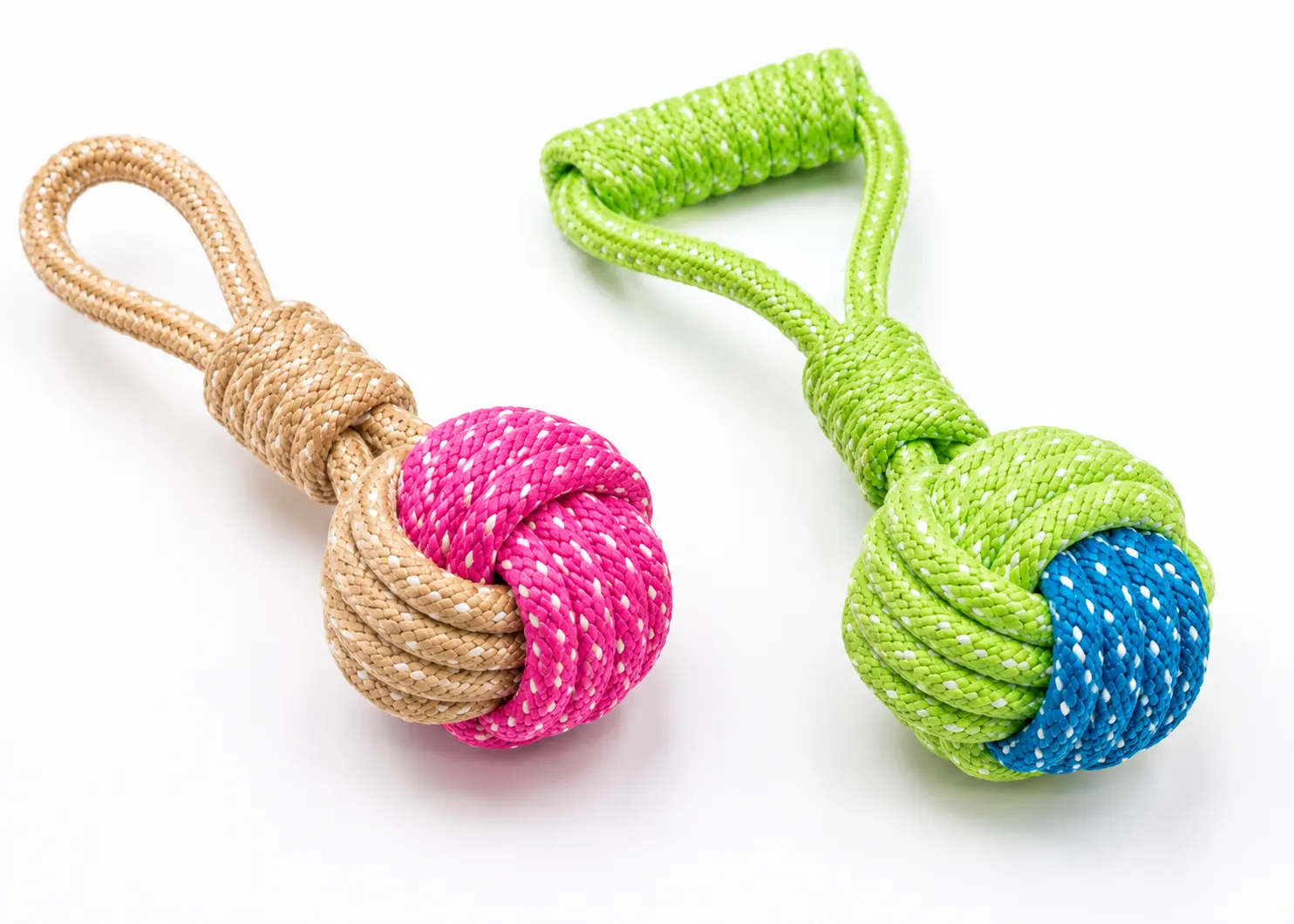
The Dog Rope Toy with Ball ($12.99) pairs a knotted cotton rope with a bumpy, rubber-textured ball section, sized at about 10.23 inches (26 cm) end to end. It’s built for average chewing habits, not aggressive chewers or large breeds — a good fit for puppies and small-to-medium dogs specifically.

Tan-pink and green-blue rope ball dog toys with braided handle loops

The Cotton Rope Chew Ball Toy for Dogs covers more ground, priced from $6.99 to $59.99 across sizes running roughly 2.4 to 12.6 inches (6 cm to 32 cm). Because the size range is so wide, the same product line works for a small terrier and a large shepherd — you pick the size that fits your dog rather than switching to a different product as they grow.

Want to see everything else we carry? Browse the rest of our rope toy lineup, including the animal-shaped options in our guide to character-shaped rope toys if your dog prefers a toy with more personality than a plain ball.

Frequently Asked Questions


Is a rope ball toy good for both tug of war and fetch?

Yes — that’s the main advantage of this toy type. The rope handles tug, and the ball section works for throw-and-fetch, so you get two play styles from one toy instead of switching between separate ones.

Generally, no. The rope portion wears down faster under hard chewing than the ball does, and a heavy chewer can work through it quickly. If that’s your dog, a toy built specifically for aggressive chewers is a better fit.

It depends on your dog’s size and chewing style. Our smaller build runs about 10 inches for puppies and small-to-medium dogs, while our multi-size option spans roughly 2.4 to 12.6 inches to fit small, medium, and large breeds from the same lineup.

Neither is strictly better — it depends on your priorities. Cotton feels more natural and is gentler on gums; biothane and rubber options dry faster and resist moisture better, but feel firmer to chew.

Hand-wash it with soap and water, then let it air-dry completely before your dog plays with it again. Skip the microwave or dishwasher methods sometimes used for plain rope toys, since a ball piece can react differently to heat.

There’s no fixed number, but checking it every 2 to 4 weeks for fraying is a reasonable habit for regular use. Heavy chewers will wear through a rope ball toy faster than that; light chewers may get more time out of it.

Yes — some owners use the ball end as a reward or engagement tool during training sessions, similar to how a tug toy gets used in obedience or focus work, though this isn’t specific to any one product we carry.

A rope ball toy won’t survive a determined power chewer, and it’s not trying to — it’s built for everyday tug, fetch, and gnawing at a normal pace. See the full dog rope toys category to find the size and style that actually fits your dog.

Leave a Comment

Your email address will not be published. Required fields are marked *

Scroll to Top